

GET ACCESS TO OUR AMAZING BLOG DIRECT TO YOUR INBOX
Get industry updates, tips, guides, training documents, white papers and much more direct to your inbox.
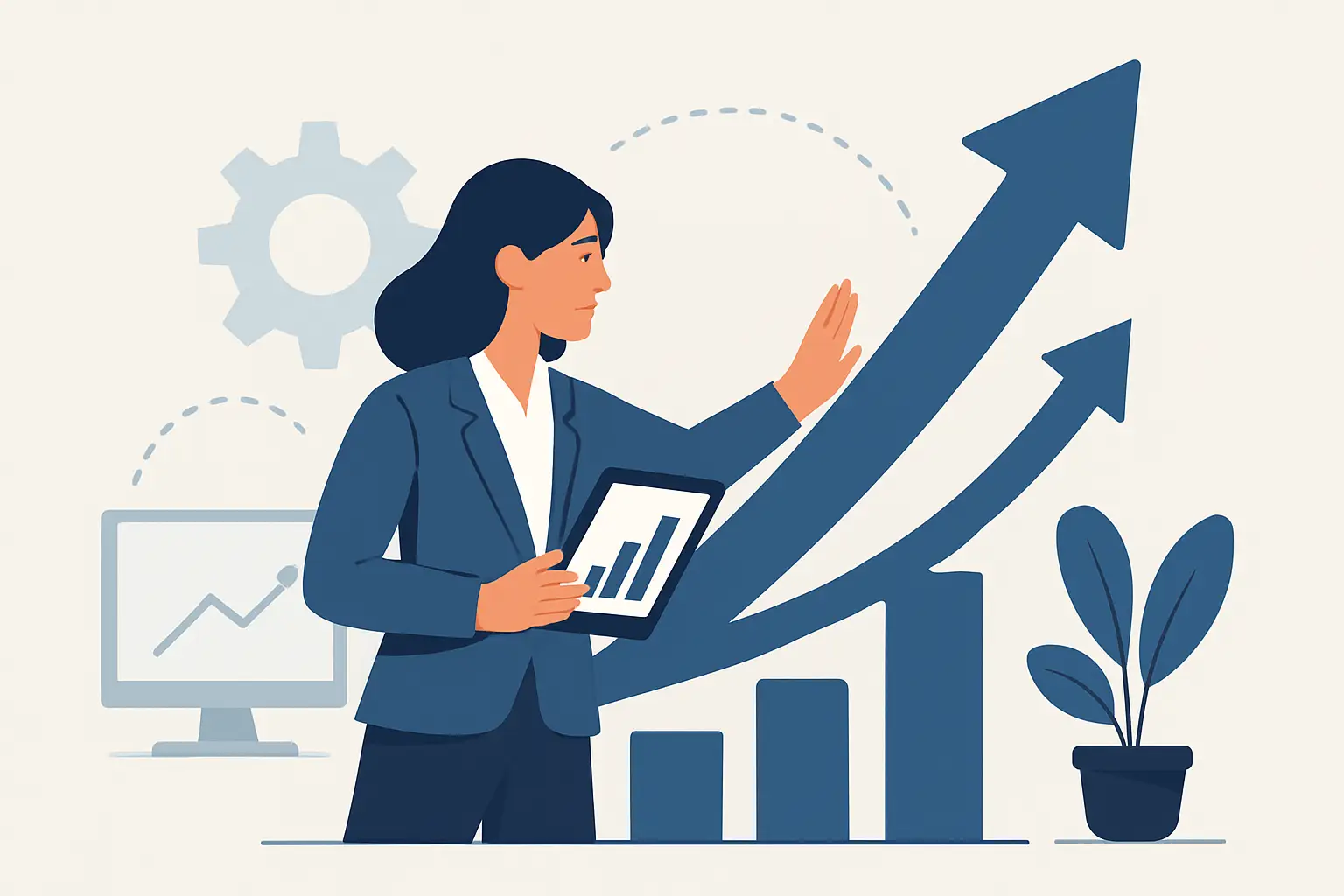
You know the feeling: leads are a bit too quiet, competitors are all over Google, and every platform has its own “must-do” best practice that changes weekly. You could hire internally, brief freelancers, or try to stitch together a few tools and hope it holds.
A good digital agency helps by doing the unglamorous but decisive work – turning marketing into a predictable system for enquiries and sales, with clear tracking and ongoing optimisation. Not “more activity”, but better outcomes.
How can a digital agency help, in practical terms?
It starts with focus. Most businesses do not need to be everywhere, all at once. They need to be in the right places, with the right message, driving people to pages that convert – and they need to know what’s working.
A strong agency relationship typically covers four things at the same time: a plan for acquisition, the channel execution to deliver it, conversion improvements to make traffic pay back, and reporting that lets you make decisions without guessing.
The trade-off is simple: you swap some internal control for speed, specialist depth, and repeatable processes. If you want total hands-on control day to day, an agency can feel like an adjustment. But if you want performance without living inside ad platforms, analytics dashboards and algorithm updates, it can be a genuine advantage.
Strategy that connects channels (instead of “random acts of marketing”)
A common failure mode is treating SEO, paid media and social as separate projects with separate goals. You end up with disconnected wins: a few rankings here, some clicks there, and no consistent pipeline.
An agency should unify these into one growth plan. That means agreeing what counts as a lead (and what doesn’t), what a profitable cost per enquiry looks like, which services or products to push first, and how to balance short-term volume with long-term efficiency.
For example, PPC can validate which keywords and offers produce real enquiries, then SEO and content can build around those themes for compounding growth. Paid social can create demand and remarket to warm audiences, while email captures and converts people who are interested but not ready yet. Each channel strengthens the others when the plan is designed that way.
Better visibility: tracking, attribution and reporting you can trust
If you cannot see what is driving revenue, you cannot scale with confidence. A digital agency helps by setting up tracking properly, then making it understandable.
That usually includes consent-aware analytics setup, conversion tracking (forms, calls, purchases), call tracking where relevant, and clear reporting that shows performance by channel and by campaign. It should also include “what we changed” and “what we’re changing next” – because numbers without context are just noise.
It depends on your sales cycle. A local service business might care most about calls and form fills by postcode. A B2B firm might need lead quality, pipeline value and sales feedback looped into reporting. A good agency will tailor measurement to your commercial reality, not force you into a generic dashboard.
SEO that targets enquiries, not just traffic
SEO is often sold as rankings. Rankings are useful, but enquiries are the point.
An agency helps by identifying the search terms that indicate intent (the phrases people use when they are ready to buy, compare, book or request a quote), then building a site structure and content plan that makes it easy for Google to understand what you do and why you’re credible.
For many GB businesses, local SEO is where the fastest wins are found. That means tightening up your Google Business Profile, improving location signals on-site, earning relevant local authority links and reviews, and creating service pages that match what people actually search.
For competitive or regulated industries, SEO needs more than a few blog posts. You need a deliberate approach to expertise signals, compliance-friendly content, and a technical foundation that supports crawlability, speed and structured data. Increasingly, you also need to think about how your brand is represented in AI-driven search experiences – the way content is written, organised and referenced affects how it is surfaced and summarised.
The trade-off with SEO is time. It is not instant. A strong agency will be honest about that while still finding early wins (technical fixes, on-page improvements, priority pages) that move the needle sooner.
PPC that stops wasting budget and starts learning fast
Paid search can be a licence to print leads – or a fast way to burn money. The difference is structure, intent and ongoing optimisation.
A digital agency helps by building campaigns around your margins and your capacity. That means selecting the right match types and negatives, separating high-intent services, using ad extensions properly, and shaping landing pages and offers that make sense for the keyword.
It also means controlling waste. Many accounts leak spend through vague keywords, poor geo-targeting, weak ad relevance, or sending paid traffic to generic pages that do not answer the query.
Where PPC really earns its keep is speed of feedback. In a matter of days or weeks you can learn which messages convert, which services are most profitable, and which audiences are worth pursuing. That insight should then feed SEO, social and website improvements.
If you need a credibility marker, a Google Premier Partner status indicates the agency meets certain performance and spend criteria and has certified expertise. It’s not the only indicator of quality, but it does signal a level of maturity in paid media management.
Paid social that creates demand and captures it
Paid social is not just about “going viral”. For most growth-minded businesses it’s about efficient targeting, strong creative and consistent follow-up.
An agency helps by matching the platform to the job. LinkedIn is often better for high-value B2B lead generation; Facebook and Instagram can be strong for local and lifestyle-driven offers; TikTok can be excellent for attention and volume when creative is right.
The key is creative testing and audience strategy. You typically need a mix of prospecting (new audiences), retargeting (people who visited your site or engaged), and nurturing (email or remarketing sequences that build trust). It’s rarely one ad that “wins” forever – it’s a system of iterations where performance improves because learning is captured and applied.
The trade-off: creative demand. Social campaigns need a steady stream of fresh angles, offers and formats. An agency can take that load off your team and keep the account moving rather than stalling after a couple of posts and a boosted ad.
Conversion-focused web experiences that turn clicks into customers
Driving more traffic to a site that does not convert is a frustrating way to grow. A digital agency can help you get more from what you already have.
This usually means improving landing pages and key service pages: clearer value propositions, stronger proof (reviews, case studies, accreditations), simpler forms, faster load times, better mobile layouts, and calls-to-action that match intent. Sometimes it means rebuilding sections of the site so the user journey is logical and the offer is obvious.
Conversion work is also about reducing friction. If you are in a sector where trust matters (legal, healthcare, financial services, construction), the page needs to do the reassurance job: who you are, why you’re qualified, what happens next, and how quickly you respond.
A good agency will test changes carefully. Not every “best practice” lifts conversion for every business. The best approach is measured iteration: change what matters, track the impact, keep what works.
Content and email that keep your pipeline warm
Some prospects are ready now. Many are not. Content and email help you stay in the consideration set without paying for every touch.
An agency helps by creating content that has a role: supporting SEO, answering sales objections, proving expertise, and giving your sales team assets to share. This is especially valuable in longer sales cycles where buyers need reassurance and comparison before they commit.
Email marketing then turns interest into action. Simple, well-timed sequences – enquiry follow-ups, quote nudges, reactivation campaigns, newsletters with genuine value – can lift conversions without increasing ad spend. The win is efficiency: more revenue from the same traffic.
A team you can lean on, not a black box
The best agency partnerships feel like an extension of your internal team. You should have a dedicated point of contact, clear timelines, and straight answers about what’s happening and why.
If you are evaluating agencies, look for signs of transparency: how they explain performance, how they handle tracking, how they respond when something underperforms, and whether they talk about your business model (margins, capacity, sales process) rather than just clicks and impressions.
It’s also worth being honest about your side of the equation. Agencies can drive performance, but they cannot answer missed calls, fix slow follow-up, or make an uncompetitive offer profitable. The strongest results come when marketing and operations are aligned.
If you want a benchmark for what “integrated and accountable” can look like, Finsbury Media positions its service around measurable growth, multi-channel execution, and clear reporting – the kind of partnership built for businesses that want consistent enquiries rather than disconnected channel activity.
The closing thought
The real question is not whether a digital agency can do your marketing. It’s whether they can make growth feel controllable: clearer numbers, cleaner decisions, and a pipeline you can plan around. When that happens, marketing stops being a monthly mystery and starts becoming one of the most predictable parts of the business.