

GET ACCESS TO OUR AMAZING BLOG DIRECT TO YOUR INBOX
Get industry updates, tips, guides, training documents, white papers and much more direct to your inbox.
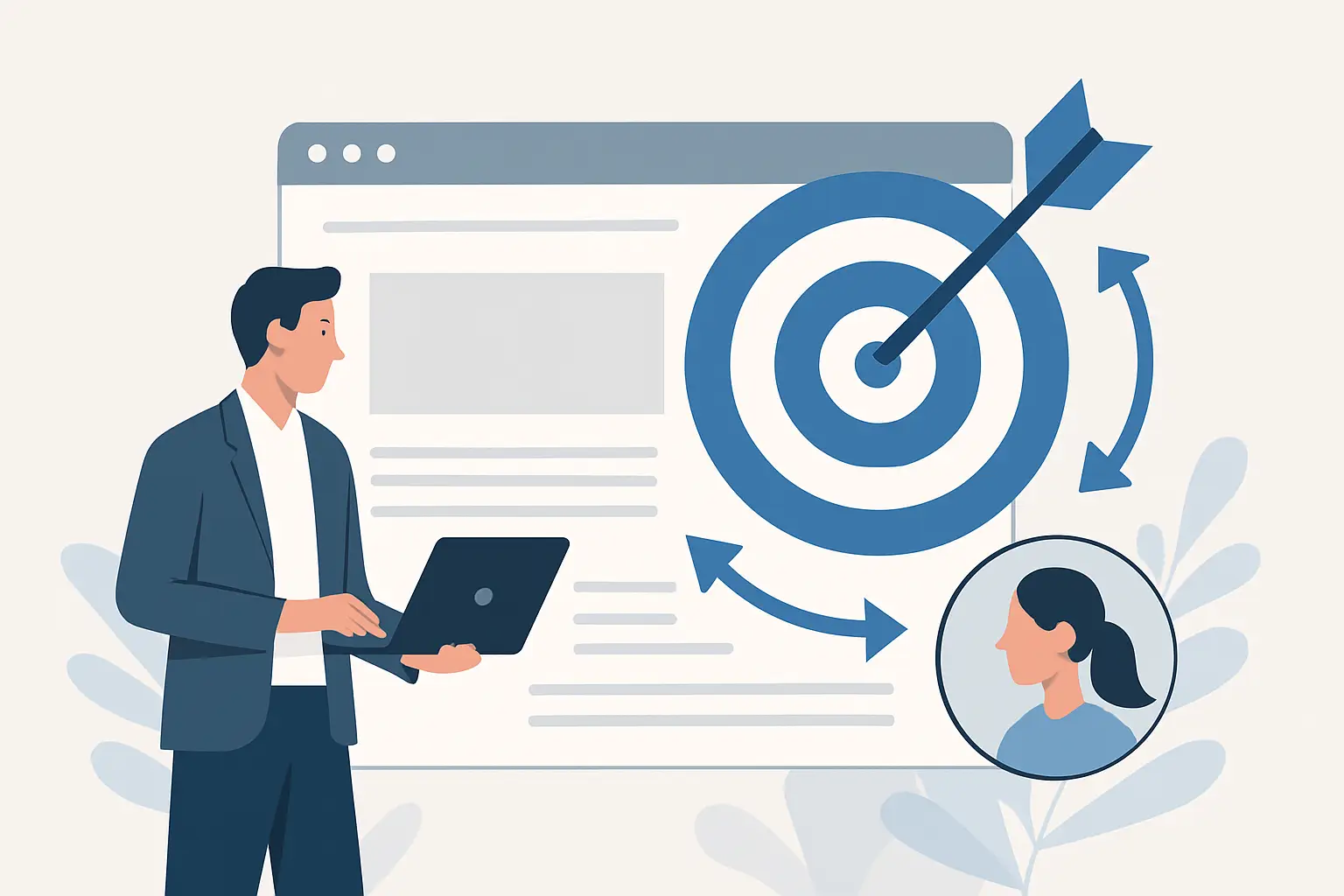
Someone visits your site, reads two pages, maybe even checks your pricing… then disappears.
If you are relying on that visitor to remember you later, you are leaving revenue to chance. Retargeting exists for one reason: to bring high-intent people back at the moment they are most likely to convert. But not all retargeting is created equal, and hiring a retargeting agency for website visitors only pays off when it is built around real intent, clean tracking, and ads that actually match where the person is in the buying journey.
This is a practical guide to what a good agency should do, what you should expect to see in reporting, and where retargeting fits in a wider performance marketing plan.
What retargeting really does (and what it does not)
Retargeting is often described as “showing ads to people who have been on your website”. That is technically true, but it is not the goal.
The goal is to reduce the wasted gap between first interest and final action. For a roofer, that might mean getting a quote request after someone checks your service area. For a law firm, it could be a consultation booking after someone reads about a specific case type. For ecommerce, it is typically a sale or a repeat purchase.
What retargeting does not do is fix weak fundamentals. If the offer is unclear, the landing page is slow, the tracking is broken, or the sales team is not following up, retargeting will amplify the problem – you will simply pay to bring people back to an experience that still does not convert.
When you should hire a retargeting agency for website visitors
It makes sense to invest in specialist help when you have enough traffic and enough margin to learn quickly. You do not need tens of thousands of visits a month, but you do need a steady flow of relevant users so that audiences can populate and performance can be measured.
You are also a good fit if your sales cycle is longer than a single session. Many mid-market businesses and regulated industries sit here: legal, healthcare, construction, manufacturing, iGaming, travel. In these spaces, trust and timing matter. Retargeting keeps you present without relying on one perfect first visit.
If you are running paid search or paid social already, retargeting usually becomes the layer that improves the efficiency of your existing spend. It is often cheaper to convert a warmed audience than to keep paying for cold clicks.
The difference between basic retargeting and conversion-led retargeting
Basic retargeting is one audience, one creative set, and a frequency cap that is either too high (annoying) or too low (invisible). It is easy to set up, and it often underperforms.
Conversion-led retargeting starts with segmentation. A visitor who read a blog post is not the same as someone who visited pricing, started a form, or added to basket. A strong agency will build audiences around behaviour and intent, then tailor messaging accordingly.
For example, someone who hit a thank-you page should usually be excluded from lead-gen retargeting and moved into upsell, cross-sell, review generation, or retention messaging depending on your model. Someone who bounced after five seconds should not be treated like someone who spent three minutes comparing services.
What channels a good agency will consider
Most businesses associate retargeting with Meta or the Google Display Network, but effective coverage is typically multi-channel. The right mix depends on your audience and how they buy.
Google Ads retargeting works well for broad reach and for layering intent through search. You can also use YouTube for longer-form persuasion if your market needs education.
Paid social retargeting on Facebook and Instagram can be excellent for lead generation and ecommerce because creative can do more of the selling. LinkedIn retargeting can be valuable for B2B, but it needs careful audience sizing and cost control.
The point is not to be everywhere. It is to be where your visitors actually spend time, with a message that feels like a natural next step.
What to ask a retargeting agency before you sign
A good agency will welcome direct questions, because clarity is part of performance.
1) How will you track conversions and quality?
If the agency cannot explain your tracking setup in plain English, you will struggle later.
You want to know which pixels and tags are in place, how conversions are defined, and how attribution will be handled across channels. For lead generation, you also want a plan for measuring lead quality, not just volume. A form fill that never answers the phone is not a win.
2) How will you build audiences?
Listen for specifics: page-level audiences, time on site, scroll depth, video views, product views, add-to-basket, form-start, and CRM-based audiences where appropriate.
If everything is “all website visitors in the last 30 days”, you are paying for a blunt instrument.
3) What is your approach to creative testing?
Retargeting fatigue is real. The same ad shown too often becomes wallpaper, or worse, it irritates people.
A capable agency should talk about creative angles, rotation, messaging stages, and how they will test offers or proof points. For some industries, that might be credentials, awards, and guarantees. For others, it is speed, availability, and price clarity.
4) How do you manage frequency and exclusions?
Frequency is one of the quickest ways to waste spend. Too much exposure can harm brand perception, and too little means you never break through.
Exclusions matter just as much. Converted users should not keep seeing the same lead ads. Existing customers should be treated differently from first-time visitors. Competitor and employee traffic should be filtered where possible.
What a strong retargeting plan looks like in practice
Most high-performing accounts follow a simple logic: start with intent, match the message, then widen or tighten based on results.
At the high-intent end, you have visitors to pricing pages, quote pages, service pages, product detail pages, basket and checkout steps, and form-start events. These audiences usually justify higher bids because they are closer to conversion.
Mid-intent audiences might include visitors who engaged with comparison content, case studies, testimonials, or key informational pages. Here, ads should reduce friction: social proof, process clarity, “what happens next”, and a clear call-to-action.
Top-of-funnel audiences, such as blog readers, are often worth retargeting only if you have the budget and the creative to move them along. Otherwise, they can dilute performance. This is where “it depends” is honest: if your blog content is highly commercial and attracts the right buyer, it can work brilliantly. If it is broad, you may be better focusing spend lower in the funnel.
The metrics that matter (and the ones that can mislead)
Retargeting can look great in-platform because warmed audiences tend to click and convert more than cold ones. That does not automatically mean it is incremental growth.
A good agency will report in a way that helps you make decisions, not just feel good about numbers.
You should expect to see cost per lead or cost per acquisition by audience segment, conversion rate by segment, frequency trends, and creative performance over time.
View-through conversions can be useful, but they are easy to over-credit. They should be treated as directional, not as proof that every impression caused a sale. For many businesses, the most reliable view is blended: what happened to total enquiries, total sales, and overall cost per acquisition after retargeting was introduced or scaled.
Common retargeting mistakes that drain budget
The first is treating retargeting as a standalone tactic. If your search ads are promoting one message and your retargeting ads are saying something else, you lose momentum. Consistency across SEO, PPC, and paid social usually lifts conversion rates because the buyer keeps seeing the same promise and proof.
The second is sending all retargeting traffic to the homepage. Retargeting works best when it continues the conversation. If someone looked at “emergency boiler repair”, send them back to that service with a clear enquiry path, not a generic page that makes them hunt.
The third is ignoring landing page performance. Even small improvements – faster load time, clearer forms, better trust signals – can make retargeting dramatically more profitable because you are reintroducing people who already showed interest.
Why integration matters more than most people think
Retargeting performs best when it is part of an integrated framework.
If your SEO is bringing in visitors on informational queries, retargeting can move them into consideration with case studies and service explainers. If your Google Ads campaigns are generating high-intent clicks, retargeting can capture the people who were interested but not ready. If your paid social is building awareness, retargeting can turn engagement into booked calls.
This is also where your tracking and reporting should tie together. You should be able to see, month by month, how retargeting supports the bigger commercial goal: more qualified enquiries, more sales, and a clearer pipeline.
If you want a partner that runs retargeting as part of a broader performance engine – with clear reporting and hands-on account management – Finsbury Media builds campaigns around measurable growth rather than isolated channel tactics.
A closing thought before you brief an agency
Retargeting is not magic. It is managed repetition with purpose.
If you go into it with one clear conversion goal, a plan for audience intent, and the discipline to measure quality as well as quantity, it becomes one of the most reliable ways to turn “nearly” visitors into consistent revenue – without having to constantly chase colder and colder traffic.