

GET ACCESS TO OUR AMAZING BLOG DIRECT TO YOUR INBOX
Get industry updates, tips, guides, training documents, white papers and much more direct to your inbox.
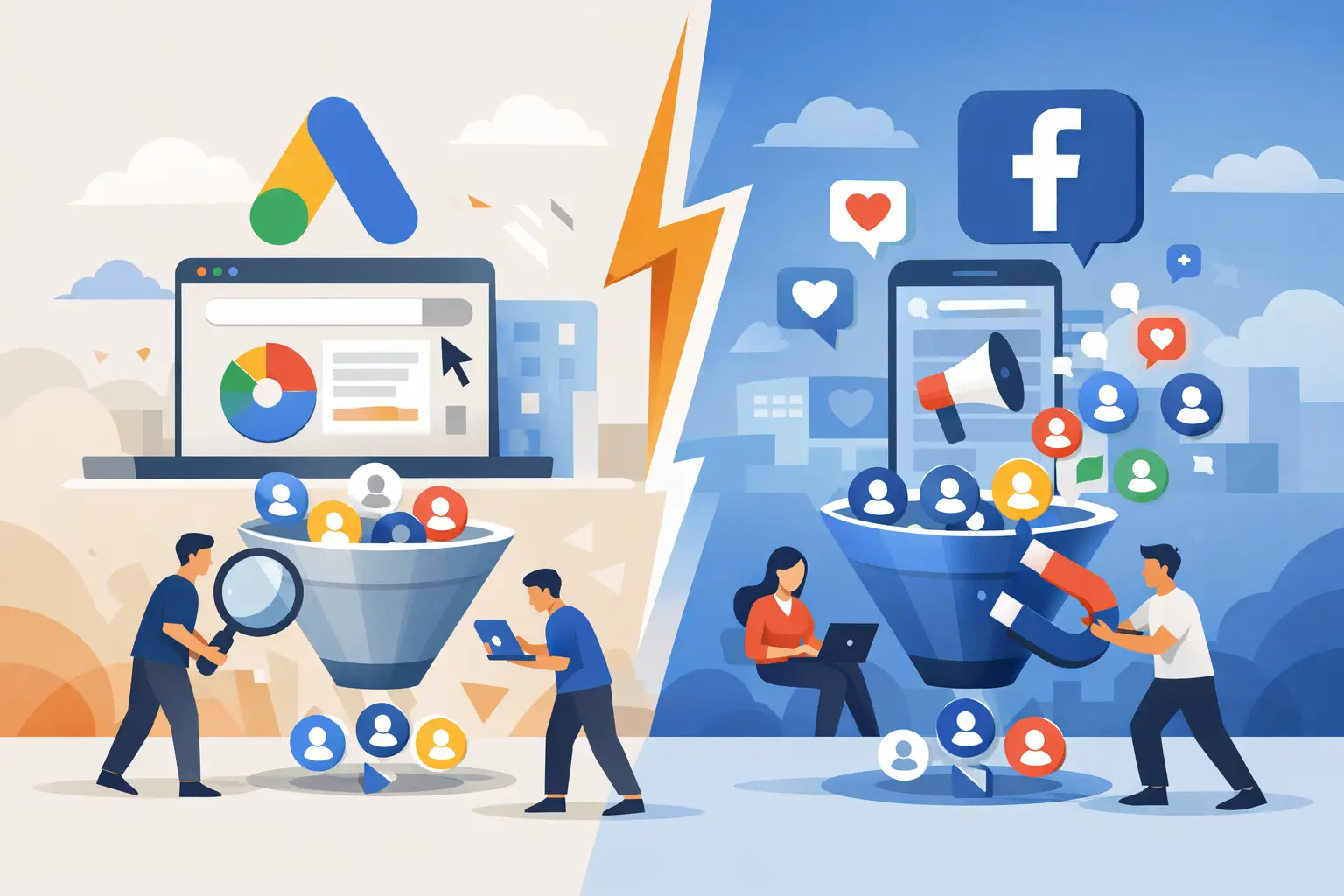
A roofing firm needs quote requests this month. A dental clinic wants a steadier pipeline of higher-value treatments. A software company is trying to fill demos without wasting budget on poor-fit prospects. In each case, the question comes up quickly: google ads vs facebook ads leads – which one actually delivers better results?
The honest answer is that both can work exceptionally well, but they solve different lead generation problems. If you choose based on headline CPCs or what worked for someone else in another industry, you can spend a lot and still end up with weak enquiry quality. The better approach is to match the platform to buyer intent, sales cycle, offer strength and how quickly you need results.
Google Ads vs Facebook Ads leads: the core difference
Google Ads captures demand that already exists. Someone searches for “emergency dentist near me” or “commercial roofing contractor London” because they need help now, or very soon. That urgency is what makes Google such a strong lead generation channel for many service-led businesses.
Facebook Ads works differently. It creates and shapes demand while people are scrolling, browsing and being distracted by everything else in their feed. They were not actively searching for your service in that moment. Your advert has to stop them, build interest quickly and make the next step feel easy enough to take.
That distinction matters because it affects not just volume, but lead quality, conversion rates and how much sales effort is required after the form comes in.
If your prospects know what they need and are already looking for it, Google often wins on intent. If your market needs education, repeated exposure or stronger brand familiarity before converting, Facebook can become far more efficient than many businesses expect.
When Google Ads brings better leads
Google tends to produce stronger leads when the service is urgent, problem-led or location-specific. Think solicitors, dentists, accountants, HVAC, construction, legal claims, removals or specialist B2B services where the buyer has a clear need and is ready to compare options.
In these cases, search intent does a lot of the qualifying for you. A person typing a specific service query is much closer to action than someone who has clicked a social advert out of curiosity. That often means better conversion from lead to sale, even if the cost per lead looks higher on paper.
This is where many businesses get caught out. They compare channels only by CPL and ignore close rate. A Facebook lead at £20 is not better than a Google lead at £70 if the cheaper lead rarely answers the phone or never progresses. The metric that matters is cost per qualified lead and then cost per client.
Google is especially strong when there is obvious commercial intent in the search term. High-intent keywords such as “private physiotherapist booking”, “payroll outsourcing service” or “boiler repair near me” usually outperform broader awareness-led targeting because the user has already moved closer to a decision.
That said, Google is not automatically efficient. In competitive sectors, clicks can be expensive, poor keyword targeting can drain budget quickly, and weak landing pages can waste valuable intent. Great performance comes from the full system – search terms, ad copy, conversion-focused landing pages, call tracking, form design and disciplined optimisation.
When Facebook Ads brings better leads
Facebook and Instagram can outperform Google when the audience is not actively searching yet, or when your offer benefits from strong visuals, education or lifestyle positioning. This is common in cosmetic treatments, elective healthcare, home improvements, fitness, training, events, franchises and many B2C services with emotional drivers.
It can also work well in B2B when the market is niche and the message is sharp. A manufacturing business promoting a highly specific solution, for example, may find that paid social reaches decision-makers earlier in their buying journey and builds demand before a search ever happens.
The strength of Facebook lies in targeting and creative. You can shape messaging around demographics, interests, behaviours and lookalike audiences, then test different hooks to see what actually moves people. That gives you room to create demand rather than waiting for it.
The trade-off is intent. Social leads can be colder. Some will enquire with only a loose understanding of price, suitability or timescales. That does not make them bad leads, but it does mean your follow-up process has to be tighter. Speed-to-lead, clear qualification and consistent nurturing matter far more.
Facebook also performs well where the first conversion is a softer step. Think brochure downloads, free consultations, webinar registrations or lead magnets that warm prospects up before a sales conversation. If you expect strangers on social to book a high-value service immediately, performance may disappoint unless the offer is very compelling.
Cost, quality and speed: what businesses should really compare
Most decision-makers ask the same three questions. Which platform is cheaper? Which brings better-quality enquiries? Which works fastest?
On cost, Facebook often produces lower top-line CPLs. The clicks are frequently cheaper, and lead forms can make conversion friction low. But lower friction can also mean lower commitment. Google leads often cost more, yet they may be more qualified because the user started with intent.
On quality, Google usually has the edge for bottom-of-funnel demand. Facebook can still generate excellent leads, especially with a strong offer and tight audience targeting, but quality is more sensitive to creative, follow-up and qualification.
On speed, Google can produce results fast if there is active search demand and the account is structured properly. Facebook can also move quickly, but it often needs more testing to identify the right audience, message and creative combination. The learning curve is different.
For many businesses, the real question is not google ads vs facebook ads leads in isolation. It is where each platform sits within the wider acquisition mix.
Google Ads vs Facebook Ads leads by business type
For local service businesses, Google is often the first priority. If someone needs a roofer after a leak or wants an emergency appointment, they search. Being visible at that moment is hard to beat.
For considered consumer services, the answer is more mixed. A clinic offering cosmetic dentistry or skin treatments may use Facebook to build awareness and capture interest, then Google to convert branded and high-intent searches later. That combination usually performs better than relying on one channel alone.
For B2B companies, Google is strong when prospects search by problem or service category. Facebook can still support lead generation, but often as part of a broader journey that includes remarketing, educational content and multiple touchpoints.
For regulated or high-trust sectors such as legal and healthcare, both channels can work, but the bar for messaging, compliance and landing page clarity is higher. Better results usually come from tighter qualification and clearer expectations before the lead is submitted.
Why attribution often skews the answer
One of the biggest mistakes in channel comparison is giving all the credit to the last click. A prospect might first see your brand on Facebook, ignore it, come back later through Google, then convert after clicking a branded search advert. If you only look at last-click reporting, Google appears to have done all the work.
That is why proper tracking matters. Call tracking, CRM feedback, offline conversion imports and visibility into qualified lead outcomes give a more truthful view of performance. Without that, businesses often scale the wrong channel and cut the one that was quietly assisting conversion.
This is also where an integrated approach becomes valuable. At Finsbury Media, we see stronger long-term performance when paid search and paid social are managed as connected parts of one enquiry-generation system rather than separate silos.
So which should you choose?
If you need leads from people already looking for your service, start with Google Ads. If your audience needs persuading, educating or repeated exposure before they act, Facebook Ads may be the smarter first move.
If you have the budget, the strongest option is often both. Use Google to capture high-intent demand, Facebook to build awareness and remarketing to bring undecided prospects back. That structure gives you coverage across the full decision journey, not just the final click.
The right choice comes down to four practical factors: how much demand already exists, how urgent the service is, how strong your offer is, and how well your team handles follow-up. Get those right and either platform can become a serious growth channel.
If you are choosing where to place your next pound of budget, do not ask which platform is better in general. Ask which one fits your buyers, your sales process and your growth target right now. That is where better leads start.