

GET ACCESS TO OUR AMAZING BLOG DIRECT TO YOUR INBOX
Get industry updates, tips, guides, training documents, white papers and much more direct to your inbox.
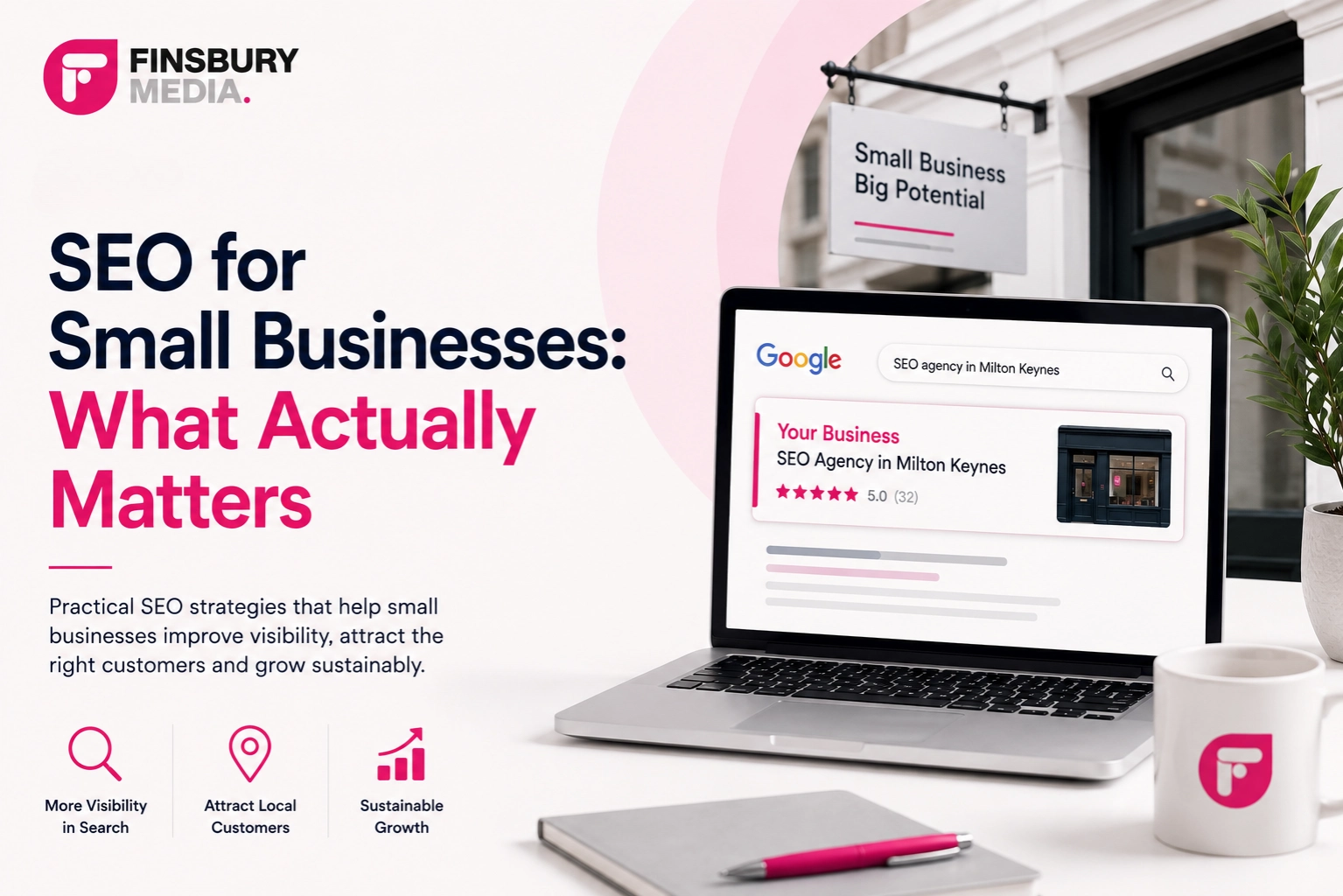
Search engine optimisation remains one of the most valuable long-term marketing channels for small businesses. However, SEO advice online is often overly technical, outdated, or focused on large companies with significant budgets.
For small businesses, effective SEO is usually much simpler than people expect. The goal is not to compete with global brands for broad search terms. Instead, it is about improving visibility for the searches that genuinely matter to potential customers.
A strong SEO strategy helps businesses appear when users are actively searching for products or services, increasing both website traffic and enquiry opportunities over time.
Businesses working with a professional SEO agency should focus on sustainable improvements that support long-term growth rather than quick fixes or shortcuts.
What SEO Actually Means
SEO is the process of improving a website so search engines can better understand its content and present it to relevant users.
The main goal is to increase visibility within Google search results for valuable keywords related to the business.
For small businesses, this often includes:
- Local searches
- Service-based keywords
- Informational searches
- Industry-specific terms
Good SEO is not about tricking search engines. It is about creating a website that is genuinely useful, technically sound, and easy for users to navigate.
An experienced SEO agency will usually focus on improving both search visibility and overall website quality rather than relying on outdated optimisation tactics.
Targeting the Right Keywords
One of the biggest mistakes small businesses make is targeting keywords that are too broad or too competitive.
For example, ranking nationally for a keyword like “marketing agency” may be unrealistic for many smaller businesses. However, targeting more specific searches such as:
- “SEO agency in Milton Keynes”
- “Google Ads management for SMEs”
- “Web design agency for small businesses”
Can generate far more relevant traffic.
Keyword strategy should focus on:
- Search intent
- Relevance
- Local opportunities
- Commercial value
A smaller amount of highly relevant traffic is often more valuable than large volumes of untargeted visitors.
Website Structure and User Experience
Google increasingly prioritises websites that provide a positive user experience.
A website should be:
- Mobile-friendly
- Easy to navigate
- Fast-loading
- Secure
- Clearly structured
Poor website usability can affect both rankings and conversions. If users struggle to find information or pages load slowly, they are more likely to leave the site quickly.
Businesses investing in SEO should also ensure their website design supports conversion performance. An experienced web design agency can help create a structure that supports both search visibility and lead generation.
Content Still Matters
Content remains one of the most important parts of SEO.
Google wants to show users pages that provide clear, relevant, and trustworthy information.
Businesses that regularly publish useful content are often better positioned to build authority within their industry.
Effective content can include:
- Service pages
- Blogs
- FAQs
- Case studies
- Guides and resources
Small businesses should focus on answering real customer questions rather than producing content purely for search engines.
For example, users may search:
- “How much does SEO cost?”
- “Why is my website not ranking?”
- “How long does SEO take to work?”
Creating useful content around these topics can help attract qualified traffic while demonstrating expertise.
A reliable SEO agency should help businesses identify the types of content their audience is genuinely searching for.
Local SEO Is Essential for SMEs
For many small businesses, local SEO is one of the highest-value opportunities available.
Google Business Profile optimisation, local keywords, and customer reviews all contribute towards stronger local visibility.
Important local SEO factors include:
- Accurate business information
- Location-based keywords
- Google reviews
- Local landing pages
- Consistent contact details across platforms
Businesses relying on local enquiries should ensure their website clearly states:
- Service areas
- Contact details
- Opening hours
- Location information
Internal Linking and Site Structure
Internal linking helps both users and search engines navigate a website more effectively.
For example, a blog discussing SEO strategy can naturally link to related services such as SEO services or website optimisation support.
Good internal linking:
- Improves user journeys
- Helps search engines understand page relationships
- Distributes authority across the website
- Increases time spent on site
This is one of the simplest but most overlooked SEO improvements for small business websites.
Common SEO Mistakes Small Businesses Make
Many businesses struggle with SEO because they:
- Expect instant results
- Target unrealistic keywords
- Neglect technical performance
- Publish low-quality AI-generated content
- Ignore mobile usability
- Fail to update outdated pages
SEO is a long-term strategy. Businesses that consistently improve their website and content tend to perform better over time.
What Small Businesses Should Prioritise in 2026
SEO continues to evolve, but the fundamentals remain consistent.
Small businesses should focus on:
- Helpful content
- Fast and mobile-friendly websites
- Clear user experience
- Strong local visibility
- Trustworthy branding
- Technically healthy websites
Businesses that focus on user experience and relevance rather than shortcuts are more likely to achieve sustainable growth through organic search.
Working with a knowledgeable SEO agency can help businesses prioritise the areas that will have the greatest commercial impact.
Conclusion
SEO does not need to be overly complicated for small businesses. The most effective strategies usually focus on clear website structure, relevant content, local visibility, and a positive user experience.
Businesses that invest consistently in SEO are often better positioned to generate long-term traffic, enquiries, and stronger ROI from digital marketing activity.
If your business is struggling to improve search visibility or generate enquiries through organic traffic, Finsbury Media can help develop an SEO strategy aligned with your commercial goals.