

GET ACCESS TO OUR AMAZING BLOG DIRECT TO YOUR INBOX
Get industry updates, tips, guides, training documents, white papers and much more direct to your inbox.
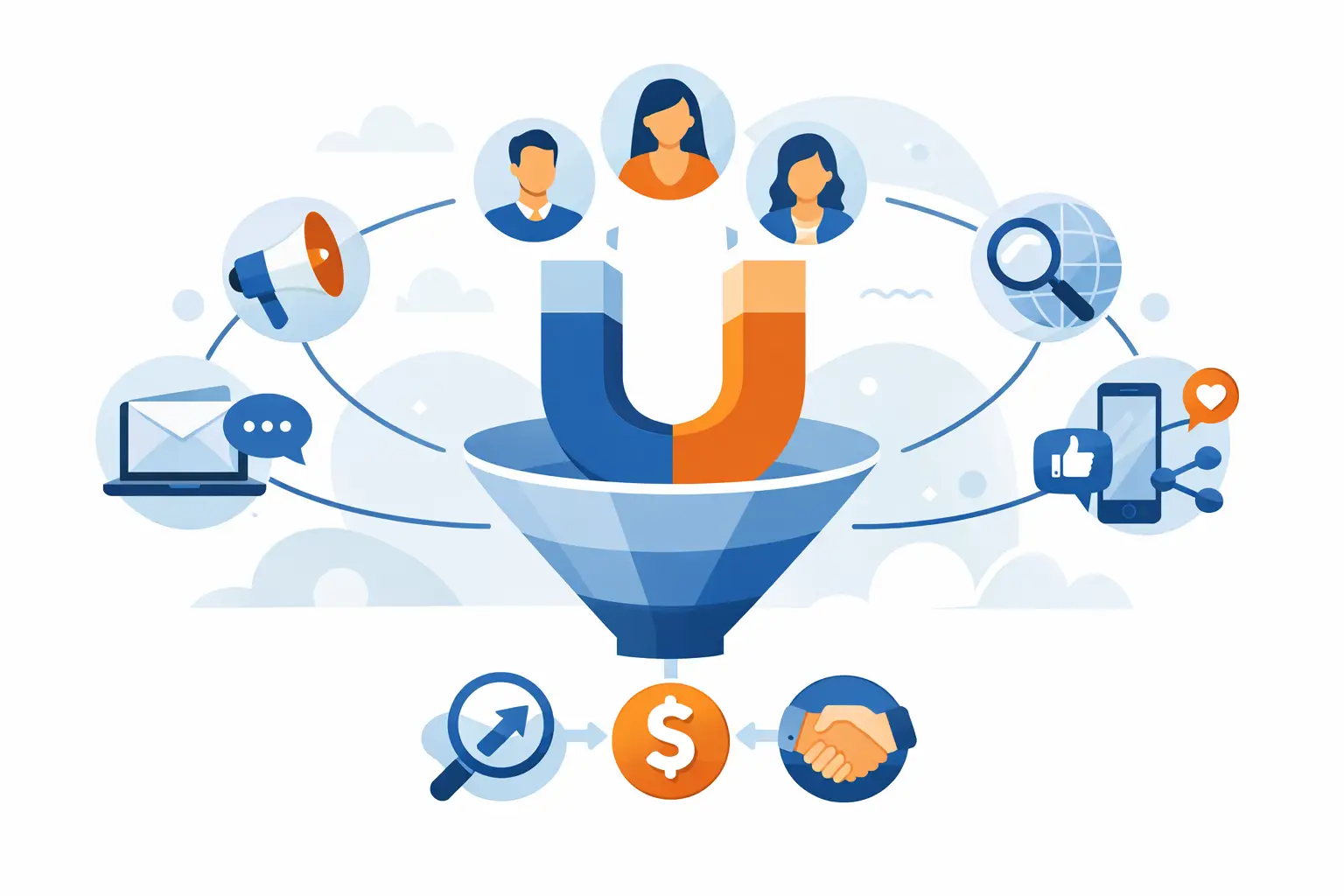
When lead volume looks healthy but sales still feel patchy, the problem is rarely effort. It is usually channel quality. The best channels for qualified leads are not simply the ones that send the most traffic – they are the ones that bring in people with clear intent, a realistic budget and a genuine reason to buy.
That distinction matters for growing businesses. A campaign can look efficient on paper and still waste your team’s time if the enquiries are vague, unready or simply the wrong fit. The smarter approach is to judge every channel by lead quality, conversion rate, sales cycle and cost to acquire a customer, not by clicks alone.
What makes a lead channel truly qualified?
A qualified lead channel consistently brings in prospects who match your offer, your pricing and your sales process. In practice, that means the person arriving is not just curious. They are actively comparing options, looking for a provider, or showing behaviour that suggests a real need.
For some businesses, qualification starts with intent. A person searching for a commercial solicitor in Bristol or an emergency roofer near me is showing immediate demand. For others, it starts with targeting. A LinkedIn campaign aimed at operations directors in manufacturing may produce fewer leads than Facebook, but they can be far more commercially valuable.
This is why there is no universal channel ranking that works for every sector. A dental clinic, an iGaming brand and a B2B software company should not expect the same mix. The best results usually come from aligning channel choice with buying behaviour, then tracking what happens after the form fill or phone call.
The best channels for qualified leads
1. Google Search Ads for high-intent demand
If you need leads now, paid search is often the quickest route to qualified demand. People on Google are telling you what they want in real time. When someone searches for terms tied to your service, location or urgency, they are much closer to action than a passive social media user.
This makes Google Ads especially strong for legal services, healthcare, home improvement, professional services and other categories where buyers search with a problem already in mind. Good campaign structure matters here. Broad targeting and weak keyword selection can fill your pipeline with poor-fit traffic. Tight match types, strong negative keyword lists and landing pages built around conversion are what turn paid search from expensive traffic into dependable enquiries.
The trade-off is cost. In competitive sectors, clicks are not cheap. But higher cost per click is often worth it when lead quality is stronger and close rates are better.
2. SEO for compounding lead quality
Organic search is one of the most reliable long-term channels for qualified leads because it captures intent without paying for every visit. When your site ranks for commercial searches, service-specific pages and high-value local terms, you build a steady flow of prospects who are already looking for what you do.
SEO is particularly effective for businesses with a clear service offer and strong regional or sector focus. A construction firm, private clinic or specialist manufacturer can attract highly relevant traffic by building pages around exactly how buyers search. The quality tends to improve further when content answers practical pre-sales questions, helping users self-qualify before they ever make contact.
The catch is timing. SEO rarely delivers immediate volume in competitive markets. It needs technical strength, solid content, authority signals and patience. But once momentum builds, it often becomes one of the most cost-efficient channels in the mix.
3. LinkedIn Ads for niche B2B targeting
For B2B firms selling to specific job titles, company sizes or sectors, LinkedIn can be one of the best channels for qualified leads, even when headline costs look high. The platform gives you a level of audience precision that is hard to match elsewhere.
This is useful when your buyers are a small pool of senior decision-makers. If you only want to reach managing directors, procurement leaders or heads of operations in certain industries, LinkedIn can do that with far less waste than broader social platforms. It also works well for account-based campaigns where quality matters more than scale.
That said, LinkedIn is not a volume machine for every business. It can become expensive quickly if the offer is weak or the targeting is too broad. It performs best when paired with a clear proposition, strong creative and a realistic understanding that the sales cycle may be longer than on search.
4. Paid social for demand generation and retargeting
Paid social sits in a different part of the journey. On platforms like Facebook, Instagram and TikTok, most users are not actively looking for a provider in that moment. That means colder traffic often converts at lower intent than search. Yet written off too quickly, paid social can still become a major source of qualified leads when used in the right way.
It works well when your offer has broad appeal, a strong visual angle or a persuasive hook. It is often effective for clinics, education, property, lifestyle services and brands with a clear consumer proposition. The real strength, though, is in retargeting. Once someone has visited your site, watched a video or engaged with your brand, social can bring them back and move them towards enquiry.
The channel is usually strongest as part of a system rather than as a standalone lead source. Cold awareness, warm retargeting and good landing page experience can produce excellent results. Cold traffic sent to a weak page usually will not.
5. Email marketing for reactivating warm prospects
Email rarely gets the same attention as search or paid social, but it often delivers some of the highest-quality leads because the audience already knows who you are. If someone has enquired before, downloaded a guide, subscribed for updates or interacted with your sales team, email gives you a direct route back into the conversation.
This matters because many leads are not ready on first contact. A considered purchase may take weeks or months. Smart email sequences keep your business visible, answer objections and bring warm prospects back when timing improves.
Email is not ideal for generating net-new demand at scale, but it is excellent for improving the conversion value of traffic you have already paid for. For many businesses, that makes it one of the most profitable channels in the entire mix.
6. Local SEO and Google Business Profile for service-led firms
For local businesses, few channels beat a strong presence in local search. When someone needs a dentist, chiropractor, roofer or solicitor nearby, they often make a decision from local listings before they ever browse widely. That means your Google Business Profile, review profile and local landing pages can have a direct impact on lead quality.
These searches are often highly qualified because they combine service intent with location intent. The buyer is not researching in theory. They are looking for someone who can actually help in their area.
The opportunity here is straightforward, but competition can be fierce. Strong reviews, accurate profile management and local page optimisation all matter. If those basics are neglected, competitors will absorb the demand.
7. Referral and partner channels for trust-led conversion
Not every qualified lead comes from a media platform. Referrals, strategic partnerships and industry relationships can produce some of the strongest opportunities because trust is built in from the start. In sectors where credibility matters – law, finance, healthcare, specialist B2B services – referred leads often convert faster and at higher values.
The limitation is scale. Referral channels are powerful, but they are harder to control than paid acquisition. They work best when treated as part of a broader growth strategy, not the whole plan.
Choosing the right mix for your business
The right answer depends on your sales cycle, average deal value and how people buy in your market. If you need immediate enquiries, search-led channels usually deserve early budget. If you are building long-term visibility, SEO and content should not be left behind. If your audience is narrow and senior, LinkedIn may justify its premium. If you need to stay in front of warm prospects, email and retargeting often do more heavy lifting than businesses expect.
Most businesses do not have a channel problem. They have an integration problem. Good lead generation comes from channels working together, with clean tracking and a clear view of what turns into revenue. That is why the strongest strategies blend short-term intent capture with long-term brand and demand building.
At Finsbury Media, that joined-up approach is what tends to separate campaigns that merely generate leads from campaigns that generate the right ones. Because when reporting is clear and every channel is judged by commercial outcome, it becomes much easier to invest with confidence.
A better pipeline usually starts with a simpler question than which platform is cheapest. Ask which channel brings the people most likely to buy, then build from there.