

GET ACCESS TO OUR AMAZING BLOG DIRECT TO YOUR INBOX
Get industry updates, tips, guides, training documents, white papers and much more direct to your inbox.
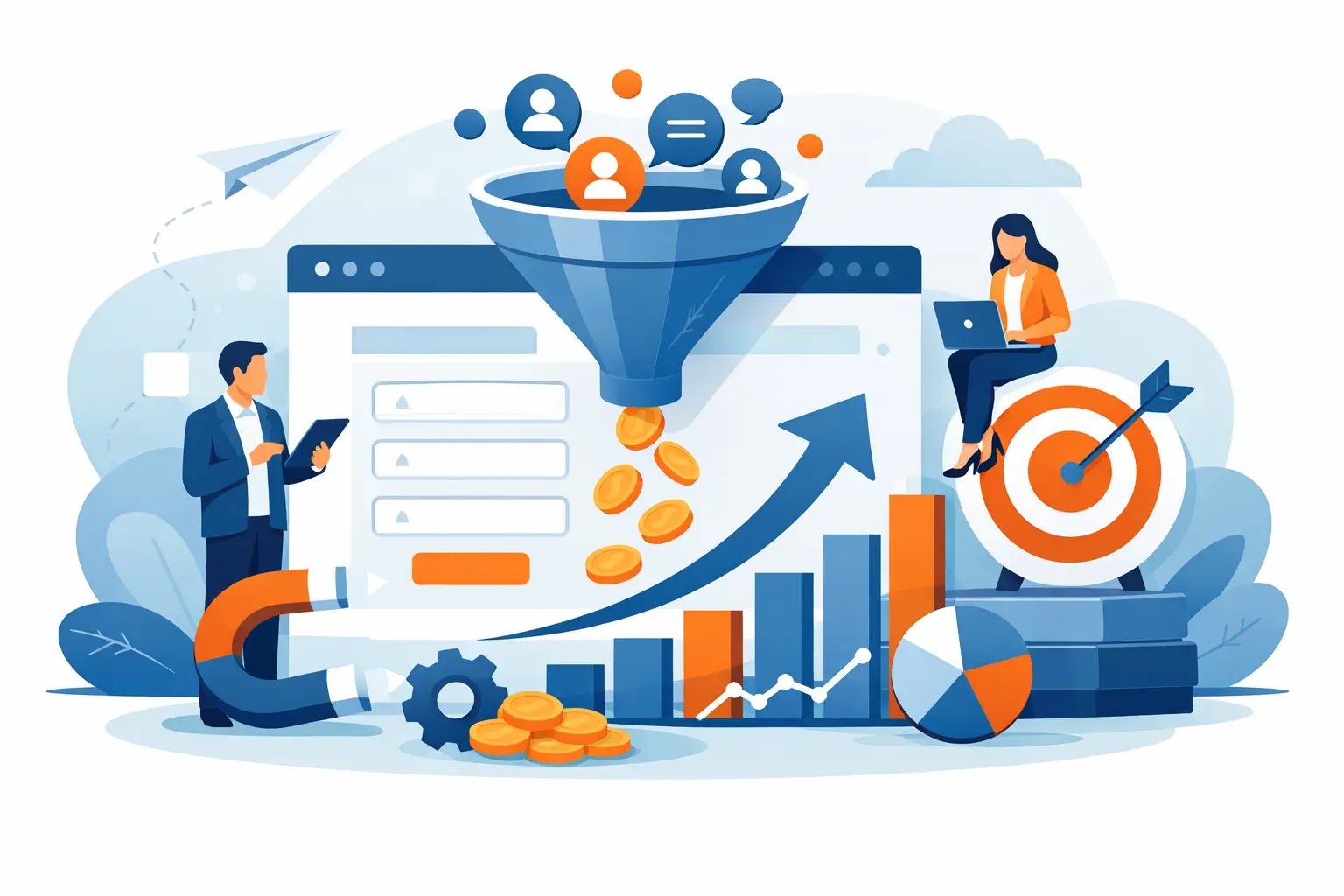
A lead generation site does not need more traffic if the traffic it already has is slipping through the cracks. We see this often: solid SEO, healthy ad spend, decent click-through rates, then a website that asks too much, says too little, or makes the next step harder than it should be. That is where conversion rate optimisation for lead gen sites stops being a nice extra and starts being a growth lever.
For most businesses, especially in competitive sectors, small gains in conversion rate can change the economics of the whole marketing programme. If your site converts 2% of visitors into enquiries and you move that to 3%, you have increased lead volume by 50% without increasing media spend. That matters whether you are a law firm paying premium CPCs, a dental practice competing in local search, or a construction company trying to turn estimator traffic into qualified calls.
What conversion rate optimisation for lead gen sites really means
Conversion rate optimisation is often treated as button colours and headline tests. In practice, it is broader than that. For lead gen sites, the job is to remove friction, increase trust, sharpen intent, and make the next step feel obvious.
That means looking at the full journey rather than isolated page elements. Are the right visitors landing on the right pages? Does the page match the promise made in the advert or search result? Is the value proposition clear in the first few seconds? Is the form sensible for the level of buyer intent? Can someone on a mobile complete the action without pinching, zooming, or second-guessing what happens next?
The strongest CRO work is commercial, not cosmetic. It connects traffic source, message, user behaviour, and sales outcomes. It also accepts that not every lead gen site should convert in the same way. A high-ticket B2B manufacturer may need consultation requests and technical downloads. A local roofer may simply need more phone calls. A private clinic may need a higher-trust booking journey with more reassurance before contact.
Why lead gen websites underperform
Most underperformance comes from misalignment rather than a single obvious flaw. Paid traffic lands on generic service pages. SEO pages attract broad informational visits but ask immediately for a consultation. Forms request ten fields when four would do. Testimonials are hidden halfway down the page. Tracking tells you how many form submissions you received, but not which campaigns generated qualified conversations.
There is also a common tension between marketing and operations. Marketing wants more leads. Operations wants better leads. Sales wants more context. Compliance wants more information collected upfront. The result can be a form or journey built around internal convenience instead of user momentum.
This is why CRO needs to be anchored to lead quality as well as lead volume. A shorter form may lift conversions, but if it floods the pipeline with low-intent enquiries, it is not a win. Equally, a longer form may reduce raw submissions while improving commercial value. The right answer depends on sales cycle length, average contract value, and how quickly your team can follow up.
Start with measurement, or you are guessing
Before making changes, get clear on what a meaningful conversion actually is. For some businesses, that is a completed enquiry form. For others, it includes tracked calls, booked appointments, brochure downloads, quote requests, or live chat conversations that turn into opportunities.
Good measurement should show more than top-line conversions. You need visibility into source, landing page, device, form completion rate, call quality, and ideally what happens after the lead is handed to sales. Without that, teams end up celebrating cheap leads that never close, while undervaluing channels that produce fewer but better enquiries.
This is where a more joined-up framework matters. CRO should sit alongside SEO, PPC, and paid social, not downstream from them. If one keyword theme drives low-intent traffic, the page may not be the problem. If paid social is generating mobile users with colder intent, the form and follow-up process may need to change. Measurement has to connect those dots.
The pages that usually move the needle fastest
Not every page deserves the same attention. Homepages matter, but they are rarely the quickest win. In lead gen, the highest-impact opportunities are usually service pages, location pages, paid landing pages, and any step in the enquiry journey with a visible drop-off.
Service pages
These pages often rank or receive paid clicks for high-intent terms, yet many are written like brochures. Strong service pages make the offer clear, address specific pain points, show evidence, and guide the user to one sensible next step. If a page tries to educate, persuade, reassure, and sell six different services at once, conversion usually suffers.
Paid landing pages
The biggest mistake here is sending paid traffic to pages built for everyone. A landing page should mirror the ad promise closely. If someone clicks an advert for emergency dental appointments in Manchester, they should not arrive on a generic treatments page with a buried form and no local proof points.
Contact and form pages
Many businesses lose leads at the final hurdle. Slow forms, unclear error messages, unnecessary fields, weak mobile layouts, and vague submit buttons all create friction. A form should feel proportionate to the value of the offer. Asking for a postcode and project budget may be reasonable for a building contractor. Asking for that on a basic brochure request may not be.
The CRO elements that matter most
Messaging usually comes first. If the page does not answer why someone should choose you, no design tweak will rescue it. Your headline should explain what you do and who it is for. The supporting copy should make the benefit tangible. Generic claims like “high quality service” or “trusted experts” do little on their own unless backed by specifics.
Trust signals are the next layer. Reviews, accreditations, case studies, client logos, before-and-after outcomes, and clear process explanations reduce hesitation. In regulated or high-consideration sectors, this matters even more. A legal, medical, or financial services lead is rarely acting on impulse. They are looking for reassurance that they are making a safe choice.
Page structure also matters. The best-performing lead gen pages are easy to scan. They present the core value quickly, keep calls to action visible, and avoid clutter. This does not mean every page should be stripped back to the point of looking identical. It means each section should earn its place.
Then there is speed and mobile usability. A surprising number of lead gen sites still treat mobile as a secondary experience, even when much of their paid and local search traffic comes through phones. If your click-to-call button is hard to find or your form is awkward on mobile, you are paying for lost opportunity.
Testing what actually changes results
Testing should be disciplined, not random. Start with hypotheses linked to user behaviour. If visitors are reaching a service page but not scrolling, the opening section may be weak. If they scroll but do not submit, the offer or trust signals may need work. If they begin forms but abandon them, the issue is likely friction rather than traffic quality.
A few test ideas consistently produce useful learning on lead gen sites: shorter versus longer forms, stronger proof near the top of the page, more specific headlines, alternative calls to action, and appointment-led versus enquiry-led offers. But there is no universal winner. A consultation request may outperform a quote form in one sector and underperform in another.
This is why context matters. Businesses with strong brand recognition can often ask for more commitment upfront. Lesser-known firms may need softer conversions first, such as a call back request or free assessment. High-volume, lower-value services tend to benefit from speed and simplicity. High-value B2B services often need more depth before the user is ready to enquire.
CRO works best when channels are aligned
The biggest gains often come when conversion thinking is applied across acquisition channels. SEO content can be shaped around commercial intent rather than traffic for traffic’s sake. PPC landing pages can be built around tighter keyword groupings and better message match. Paid social can use softer offers for colder audiences, then hand warmer users into stronger lead forms through retargeting.
That integrated approach tends to produce more predictable enquiry generation because each channel plays a defined role. It also makes reporting clearer. Instead of asking whether the website or the campaign is the issue, you can see how traffic quality, landing page experience, and conversion path interact.
This is the model many growth-minded businesses now need. Not disconnected tactics, but a system that maximises conversions while keeping quality in view. That is one reason brands work with agencies like Finsbury Media, where performance marketing and web conversion strategy are treated as part of the same commercial engine rather than separate workstreams.
What good looks like over time
Strong CRO is not a one-off redesign project. It is an ongoing process of learning from user behaviour and refining the experience. Some changes produce quick gains. Others reveal that the issue sits earlier in the funnel or later in the sales process.
The businesses that get the best results tend to be the ones willing to test, measure properly, and make decisions based on enquiry quality rather than vanity metrics. They understand that a higher conversion rate is only useful if it leads to better commercial outcomes.
If your lead gen site is attracting the right people but not producing enough meaningful enquiries, the answer may not be more spend. It may be a better journey, clearer proof, and fewer points of friction between interest and action.