

GET ACCESS TO OUR AMAZING BLOG DIRECT TO YOUR INBOX
Get industry updates, tips, guides, training documents, white papers and much more direct to your inbox.
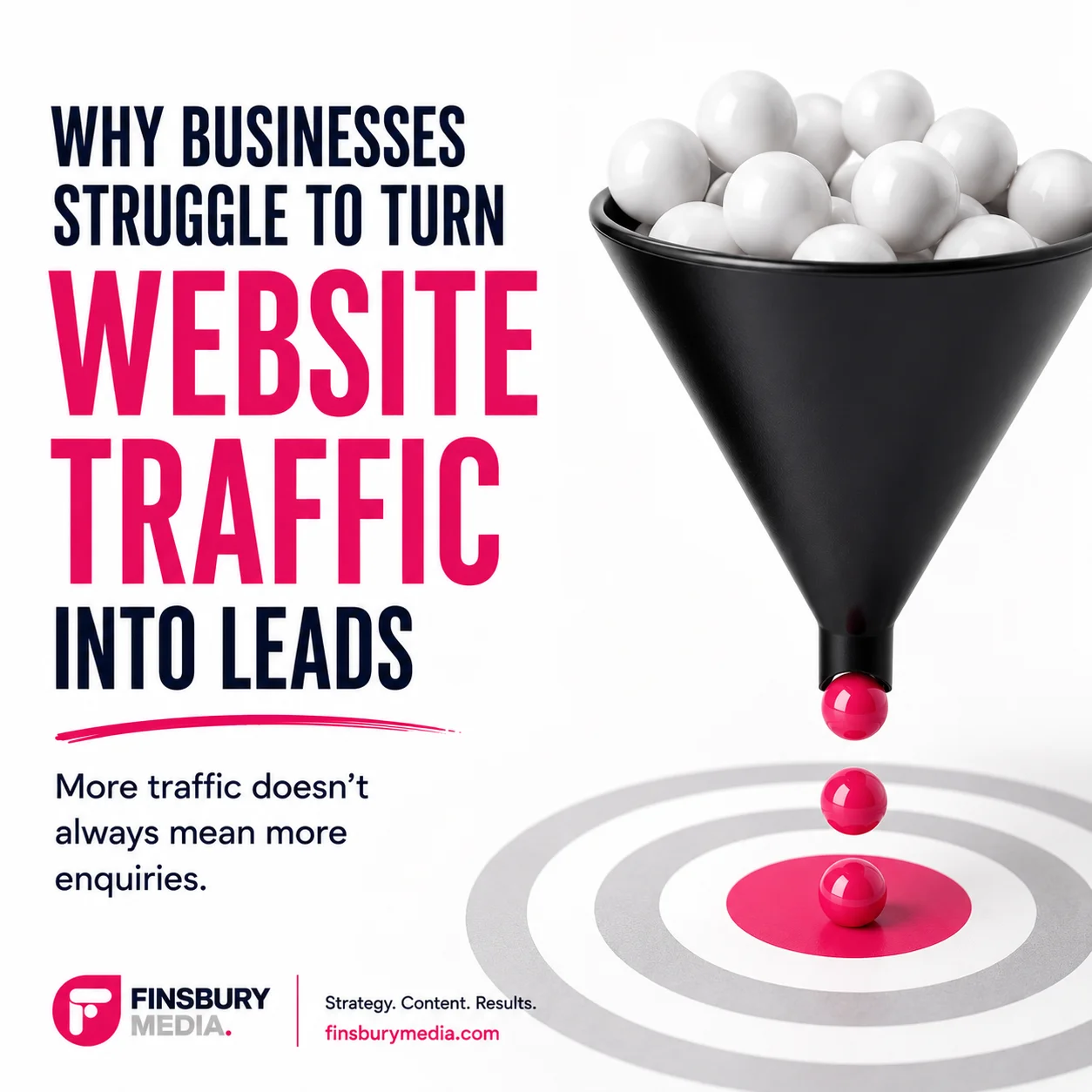
Why Businesses Struggle To Turn Website Traffic Into Leads
Many businesses invest significant time and budget into driving traffic to their website.
They improve their SEO, run Google Ads campaigns, publish content on social media and invest in digital marketing activity designed to attract potential customers. Yet despite seeing visitors arrive on their website, enquiries often remain lower than expected.
This is one of the most common frustrations business owners face. Traffic alone does not guarantee leads, and attracting visitors is only one part of the customer journey.
Understanding why website traffic fails to convert can help businesses identify opportunities for improvement and generate better results from their existing marketing efforts.
Traffic Is Only Part Of The Equation
Many businesses focus heavily on increasing website traffic because it is a visible metric.
However, traffic itself does not generate revenue. The real objective is converting visitors into enquiries, sales or other meaningful actions.
A website attracting thousands of visitors each month may still underperform if those visitors do not take the next step.
This is why businesses should evaluate both traffic and conversion performance when measuring marketing success.
The Wrong Audience Is Visiting The Website
One reason businesses struggle to generate leads is that they are attracting visitors who are unlikely to become customers.
This can happen when marketing campaigns target overly broad audiences or when content focuses on topics that generate traffic but not commercial interest.
Understanding search intent is essential. Businesses should focus on attracting visitors who are actively researching solutions, comparing providers or looking to make a purchase decision.
Traffic quality is often more important than traffic volume.
Website Messaging Is Unclear
When visitors arrive on a website, they want to understand quickly who the business is, what it offers and why they should trust it.
If messaging is unclear, visitors may leave before taking any action.
Businesses should ensure their website clearly communicates:
- What they do
- Who they help
- What makes them different
- How visitors can get in touch
Strong messaging helps visitors feel confident that they are in the right place.
Trust Signals Are Missing
Before submitting an enquiry form or making contact, most visitors look for evidence that a business is credible.
A skilled web design agency can help create trust signals that help reduce uncertainty and increase confidence.
Examples include:
- Client testimonials
- Case studies
- Reviews
- Industry accreditations
- Awards and certifications
Without these elements, potential customers may hesitate to engage regardless of how much traffic a website receives.
The User Experience Creates Friction
Even highly interested visitors can abandon a website if the experience is frustrating.
Slow page speeds, poor mobile usability, confusing navigation and lengthy forms can all reduce conversion rates.
Businesses should regularly review their website experience from the perspective of a first-time visitor.
Small improvements to usability can often have a significant impact on lead generation.
Calls To Action Are Weak Or Missing
Visitors need clear direction.
Many websites assume users will know what action to take next, but this is not always the case.
Effective calls to action help guide visitors through the customer journey. Whether the goal is requesting a quote, booking a consultation or making an enquiry, the next step should be obvious and easy to complete.
Without clear calls to action, potential leads can be lost.
Why Conversion Rate Optimisation Matters
Conversion Rate Optimisation (CRO) focuses on improving the percentage of website visitors who take a desired action.
Rather than simply increasing traffic, CRO aims to generate more value from existing visitors.
This may involve testing page layouts, improving forms, strengthening messaging or refining calls to action.
For many businesses, improving conversion rates can deliver a greater return than investing solely in additional traffic generation.
Looking Ahead
Generating website traffic is an important part of digital marketing, but traffic alone does not drive business growth.
Businesses that understand their audience, build trust, improve user experience and optimise for conversions are often able to generate significantly more enquiries from the same level of traffic.
By focusing on both visitor acquisition and conversion performance, businesses can create a more effective digital marketing strategy and achieve stronger long-term results.
If your website is attracting visitors but not generating enough enquiries, reviewing the customer journey and conversion process may reveal valuable opportunities for improvement.