

GET ACCESS TO OUR AMAZING BLOG DIRECT TO YOUR INBOX
Get industry updates, tips, guides, training documents, white papers and much more direct to your inbox.

By Darren Hall
Head of Client Services – Finsbury Media
Digital marketing never stands still. Google updates, new platforms, changing customer behaviour – just when you feel you’ve got it nailed, something new comes along.
The latest big change is Generative Engine Optimisation (GEO). This is about making sure your brand shows up not only in traditional search results but also in the AI-driven platforms that millions of people are now using to get answers.
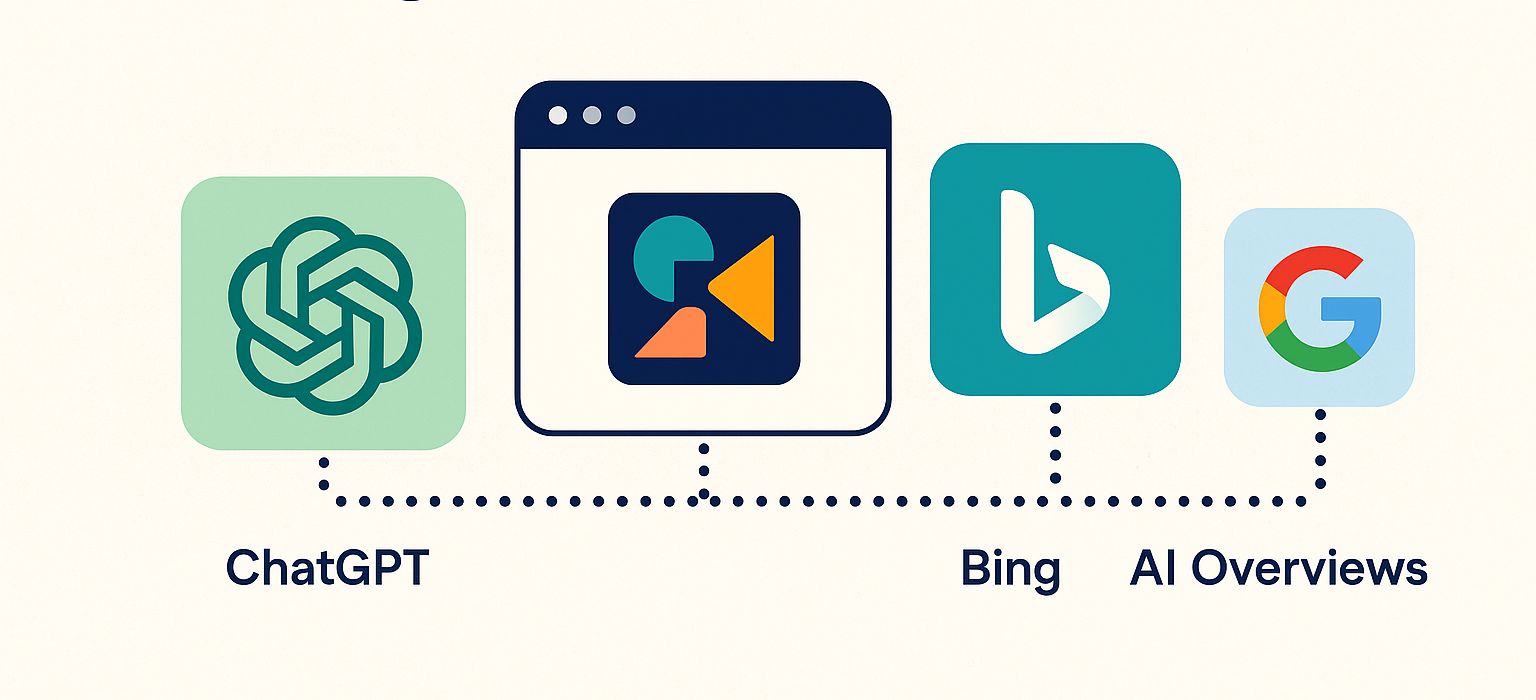
Think ChatGPT, Perplexity, Bing Copilot and Google’s AI Overviews. Instead of a page of blue links, these systems deliver a direct, conversational response – and if your business is cited in those answers, you’ve just landed premium visibility.
What exactly is GEO?
Generative Engine Optimisation is the process of tailoring your content so that AI platforms pick it up, understand it and use it in their responses.
When someone asks Perplexity “What are the best estate agents in Manchester?” or ChatGPT “How do I set up payroll for a small business?”, the AI will pull together an answer using a handful of sources it deems most reliable. GEO is about making sure your brand is one of those chosen sources.
It’s not just about traffic – it’s about trust. If an AI tool recommends your business as the answer, the user is more likely to believe you’re credible before they’ve even clicked.
Businesses looking to implement this strategy can explore our Generative Engine Optimisation services for structured AI visibility support. and link the bold text back to the GEO SEO page.
GEO vs SEO
Search Engine Optimisation (SEO) has been the backbone of digital marketing for years. It’s what helps you rank on Google or Bing when customers search for relevant keywords. GEO builds on those same foundations but takes them into the new world of generative AI.
Both SEO and GEO share the same goals: get your content seen, prove your expertise and turn visibility into leads. They also rely on many of the same tactics – keyword research, quality content, site performance, and building authority.
But here’s the difference. SEO is designed for algorithms that return a list of web pages. GEO is designed for engines that generate an answer. Instead of optimising for a place on page one, you’re optimising to be cited inside the answer itself.
That means context, clarity and trust signals are even more important. AI engines don’t just look for keywords – they look for content that directly addresses the question, is backed by reliable sources, and is written in a way they can easily interpret.
Why GEO matters
The shift to AI-driven search isn’t on the horizon – it’s already happening.
- Backlinko reports that 13% of all Google searches now show AI Overviews, and that number is climbing every month.
- ChatGPT has 400 million weekly users (OpenAI, 2025). Many now ask it for product advice and recommendations instead of searching on Google.
- Gartner predicts that by 2026 traditional search volume will fall by 25%, and organic traffic could drop by more than 50% as users move to AI search.
User behaviour is changing fast. People are turning to AI platforms because they deliver faster, simpler answers. If your brand isn’t appearing in those answers, you’re invisible to a growing share of your potential market.
At Finsbury Media, we’ve already seen how this plays out. Several of our clients are now receiving genuine, high-quality leads directly from ChatGPT recommendations. The businesses that act early will capture this opportunity. Those that wait will be fighting from behind.
The benefits of GEO
The advantages go beyond just keeping up with search trends. Done right, GEO can:
- Expand your reach beyond Google, tapping into millions of users on AI platforms.
- Build trust and authority by being cited as a recommended source.
- Deliver warmer leads, because AI queries often come from people with specific intent.
- Future-proof your digital marketing by adapting to how search is evolving.
In other words, GEO isn’t just about visibility – it’s about credibility, lead quality and long-term competitiveness.
How generative engines work
Traditional search engines list links. Generative engines work differently. They:
- Gather data from across the web
- Analyse it to understand context and intent
- Generate a conversational answer
- Cite sources that support that answer
If your site is hard to understand, lacks authority or doesn’t directly answer the query, the AI won’t use it. If your content is clear, credible and structured, your chances of being cited increase dramatically.
Core strategies for GEO
So what does it take to optimise for generative engines? Here are the essentials:
- Create clear, useful content
Generative engines prioritise answers. That means writing content that addresses questions directly, explains concepts in plain English, and avoids jargon. FAQs, step-by-step guides and how-to content are especially powerful. - Strengthen your authority
AI systems prefer trustworthy sources. Back up claims with data, cite reputable references, and highlight your expertise. Reviews, testimonials and third-party mentions also play a role, as engines read the wider web. - Use structured data
Schema markup and well-structured pages help machines understand your content. This makes it more likely to be pulled into AI responses. - Think beyond keywords
SEO has always been about keywords. GEO is about intent. Optimise not just for “plumber Nottingham” but also for questions like “How do I stop a leaking boiler?” or “What’s the average cost of plumbing repairs in Nottingham?”. - Track your AI visibility
It’s no longer enough to just track Google rankings. Check if your brand is appearing in ChatGPT, Perplexity or Bing AI responses. Some SEO tools are starting to include “AI visibility” reporting – use it.
GEO in action
A study led by Princeton and Georgia Tech analysed 10,000 queries and found that simple tactics like citing sources, using statistics, and including expert quotes improved visibility in AI responses by 30 to 40%.
That reinforces a simple truth: credible, evidence-backed content wins. If you want AI engines to recommend you, you need to demonstrate trust and authority at every step.
The future of GEO
We’re still in the early stages, but the direction is clear.
- Voice and visual search will expand, meaning GEO will need to cover spoken and image-based queries.
- AI results will become hyper-personalised, tailored to each user’s preferences and history.
- Competition will grow as more businesses wake up to the opportunity.
McKinsey’s latest research shows that 65% of organisations are already using generative AI, almost double from the year before. Adoption is moving at speed, and search is right at the centre of it.
Key takeaway
SEO isn’t dead – it’s evolving. GEO is the next step.
By combining strong SEO foundations with GEO strategies, you put your business in front of more customers across both traditional search engines and AI platforms.
The businesses that act now will be the ones AI recommends tomorrow. Those that delay will struggle to catch up.
At Finsbury Media, we’re already helping brands make this transition, ensuring they don’t just survive the shift – they thrive in it.
Businesses looking to implement this strategy in practice can explore our ChatGPT optimisation services for UK businesses to improve AI visibility and structured search presence.