

GET ACCESS TO OUR AMAZING BLOG DIRECT TO YOUR INBOX
Get industry updates, tips, guides, training documents, white papers and much more direct to your inbox.
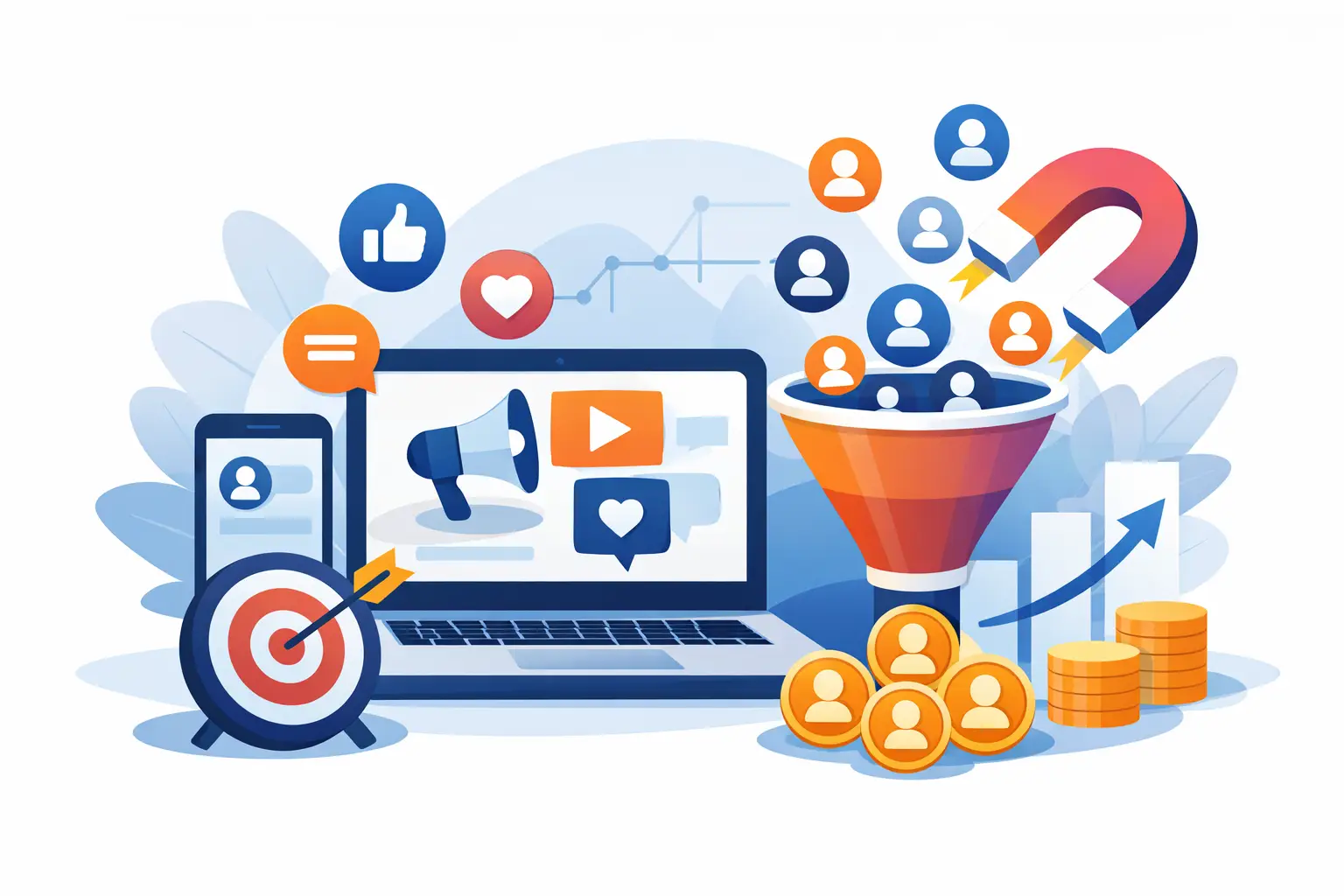
A lot of businesses waste paid social budget in the same way – they pick the platform they personally use most, not the one their buyers respond to. If you are weighing up the best paid social platforms for leads, the real question is not which channel is biggest. It is which platform can reliably turn attention into qualified enquiries at a cost your business can sustain.
That answer changes by sector, sales cycle, average order value and how much intent exists before someone sees your advert. A local dental practice, a SaaS company, a construction firm and a legal practice should not expect the same lead generation results from the same paid social mix. The strongest strategy is usually less about chasing reach and more about matching the platform to the way people buy.
What makes the best paid social platforms for leads?
Lead generation on paid social is rarely about traffic alone. Good performance comes from a combination of audience targeting, platform intent, creative fit and what happens after the click. If one of those parts is weak, even a well-funded campaign can underperform.
The best paid social platforms for leads tend to share a few traits. They give you enough targeting control to reach a specific audience, enough scale to generate volume, and enough optimisation data to improve results over time. Just as importantly, they support the kind of customer journey your business needs. Some platforms are excellent for generating quick form fills. Others are better at warming up a cold audience before search or remarketing closes the deal.
That is why platform choice should never sit in isolation. Paid social works best when it supports a broader acquisition framework, especially if you are tracking assisted conversions, branded search lift and remarketing performance rather than judging everything on last-click alone.
LinkedIn for high-value B2B leads
If you sell to decision-makers, LinkedIn is often the most obvious place to start. It remains one of the strongest channels for B2B lead generation because of its professional targeting. You can reach people by job title, seniority, company size, industry and sometimes even specific account lists.
For businesses with longer sales cycles or higher-value services, that precision matters. A manufacturing firm targeting operations directors, a software provider selling into HR teams or a consultancy trying to reach managing partners can all use LinkedIn to reduce wasted spend. The lead quality is often higher than broader social platforms because users are closer to their professional identity when they engage.
The trade-off is cost. LinkedIn clicks and leads are usually more expensive than Meta or TikTok. If your average client value is modest, the economics can become difficult very quickly. Creative also matters more than many advertisers expect. Corporate-looking adverts that say very little tend to disappear into the feed. Clear value, a sharp offer and sensible audience segmentation make the difference.
LinkedIn is strongest when lead quality matters more than raw volume. It is not always the cheapest route, but for B2B brands that need qualified conversations rather than general awareness, it often earns its place.
Meta for scalable lead generation
Meta, meaning Facebook and Instagram, is still one of the most effective paid social environments for lead generation across a wide range of industries. It is particularly strong for consumer services, local businesses, education, property, health and beauty, and many mid-ticket B2B services where broad reach and retargeting play a big role.
The main advantage is scale combined with mature advertising tools. Meta can generate a high volume of leads through instant forms, landing page campaigns and retargeting audiences. It also gives advertisers more room to test creative angles, offers and audience types without needing an enterprise-level budget.
For many businesses, Meta sits in the sweet spot between cost and volume. A local service provider such as a roofer or chiropractor can reach nearby audiences efficiently. A law firm can use it to build awareness and then retarget site visitors with a stronger offer. A B2B brand can use it less for direct conversion from cold traffic and more to stay visible during a longer buying journey.
The challenge is quality control. Cheap leads are not always useful leads. Instant forms can produce volume quickly, but if the form is too easy to complete or the messaging is too broad, sales teams may end up chasing poor-fit enquiries. Strong qualification questions, tighter creative and proper follow-up workflows are essential.
Meta performs best when you treat it as both a demand generation and lead capture platform. It can fill the pipeline, but only if your targeting and conversion setup are disciplined.
TikTok for low-cost attention and emerging lead volume
TikTok is often dismissed too quickly by businesses that assume it is only relevant for very young audiences or ecommerce brands. In reality, it can work well for lead generation if your offer can be communicated quickly and your creative feels native to the platform.
TikTok is especially effective at generating awareness and top-of-funnel engagement at a relatively efficient cost. For some sectors, including education, fitness, beauty, travel and certain local services, it can drive strong lead volume when paired with simple, direct creative. It can also work for recruitment, franchise opportunities and aspirational services where personality and proof matter.
Where TikTok becomes harder is in complex or highly regulated sectors. If your service requires trust, nuance or a long explanation before conversion, the platform may need support from stronger landing pages, retargeting and search activity. Users are also in a more entertainment-led mindset, so the journey from advert to enquiry can be less direct.
Still, TikTok should not be ruled out just because it feels less conventional. For businesses willing to test creative properly, it can produce efficient reach and surprisingly good lead numbers. The key is not to force polished corporate adverts into a platform that rewards speed, clarity and authenticity.
Which paid social platform is best for your business?
There is no universal winner in the best paid social platforms for leads debate, but there are reliable patterns.
If you are a B2B business with a high-value service, LinkedIn is often the strongest starting point. If you need broader lead volume and flexible creative testing, Meta is usually the safer bet. If you want lower-cost reach and your offer suits short-form content, TikTok is worth testing.
That said, the best-performing setup is often a combination. A business might use LinkedIn to target senior decision-makers, Meta to retarget engaged visitors and TikTok to build awareness in a younger or broader market. When those channels feed into a clear reporting structure, you get a more honest view of what is really driving enquiries.
Budget also matters. A small monthly spend spread across too many platforms usually underperforms. Concentrated testing tends to work better. It is more useful to gather meaningful data on one or two channels than to run thin campaigns everywhere and learn very little.
The platform matters less if the conversion path is weak
Businesses sometimes blame the channel when the real issue sits elsewhere. Paid social can only do so much if the landing page is unclear, the form is too long, the offer is vague or the follow-up process is slow.
This is where many lead generation campaigns fall short. A decent campaign drives interest, but weak conversion architecture turns that interest into wasted spend. If you want better results, look beyond click-through rates and ask tougher questions. Are the leads qualified? Is the sales team responding quickly? Are you measuring booked calls, quote requests or actual revenue rather than just form submissions?
That is also why integrated thinking matters. Paid social should not operate as a disconnected tactic. When it works alongside search, retargeting, email and a conversion-focused website, performance usually becomes more stable and easier to scale. That joined-up approach is where agencies like Finsbury Media tend to create the most value – not by pushing one platform, but by building a system that turns visibility into measurable growth.
How to choose with confidence
If you are deciding where to invest, start with three practical questions. Who exactly are you trying to reach? What does a profitable lead look like? And how quickly should this channel prove itself?
Those answers usually narrow the field fast. A niche B2B service with a long sales cycle should not chase low-cost volume at the expense of relevance. A local business that needs steady enquiry flow may get more from Meta than a premium B2B platform. A brand with strong video content and a broad market might find TikTok gives it cheaper testing opportunities than expected.
The right platform is the one that fits your buyers, your margin and your sales process. Once that is clear, the rest becomes far easier to manage.
Growing your lead pipeline through paid social should feel measurable, not mysterious. Pick the platform that fits the way your customers actually make decisions, and the results tend to follow.