

GET ACCESS TO OUR AMAZING BLOG DIRECT TO YOUR INBOX
Get industry updates, tips, guides, training documents, white papers and much more direct to your inbox.
Artificial intelligence has rapidly become one of the most influential developments in digital marketing.
Over the past two years, businesses have witnessed significant changes in how content is created, how search engines process information, and how users discover answers online.
In 2026, AI is no longer a future trend. It is actively shaping the search landscape.
For businesses investing in SEO, this presents both opportunities and challenges.
Many business owners are asking the same questions. Is traditional SEO still relevant? Can AI-generated content replace human expertise? How will Google’s AI-driven search experiences affect website traffic?
The reality is that SEO remains as important as ever. However, the strategies that drive success continue to evolve.
Understanding how AI is changing search can help businesses adapt their marketing approach and maintain visibility in an increasingly competitive online environment.
AI Is Transforming How People Search
For many years, search behaviour followed a relatively predictable pattern.
Users entered a query into Google, reviewed the results, and clicked through to relevant websites.
Today, search journeys are becoming more complex.
Google’s AI-powered search experiences, AI Overviews, and conversational search tools are changing how users consume information. Instead of simply displaying links, search engines are increasingly providing direct answers and summarised insights within search results.
This means businesses can no longer focus solely on ranking for keywords.
They must also ensure their content is useful, authoritative, and structured in a way that search engines can easily understand and reference.
The businesses that adapt to these changes are often the ones that continue to generate organic visibility despite evolving search behaviour.
Search Intent Matters More Than Ever
One of the biggest shifts in modern SEO is the growing importance of search intent.
Historically, many SEO strategies focused heavily on keyword placement and search volume.
While keywords remain important, search engines have become significantly better at understanding the intent behind a search.
AI systems analyse context, meaning, and user behaviour to determine which content best answers a specific query.
As a result, businesses must focus on understanding what users actually want rather than simply targeting individual keywords.
For example, someone searching for “SEO agency” may be looking for:
- A service provider
- Pricing information
- Case studies
- SEO advice
- Local expertise
Content that directly addresses user intent is more likely to perform well than content created purely around keyword density.
This shift rewards businesses that genuinely understand their audience and produce content designed to solve real problems.
Content Quality Has Become a Competitive Advantage
The rise of AI content generation tools has dramatically increased the amount of content being published online.
While this has made content creation faster, it has also created new challenges.
Search engines are becoming increasingly sophisticated at identifying content that lacks originality, depth, or genuine expertise.
Publishing large volumes of generic AI-generated content is unlikely to deliver long-term SEO success.
Instead, Google continues to prioritise content that demonstrates:
- Experience
- Expertise
- Authority
- Trustworthiness
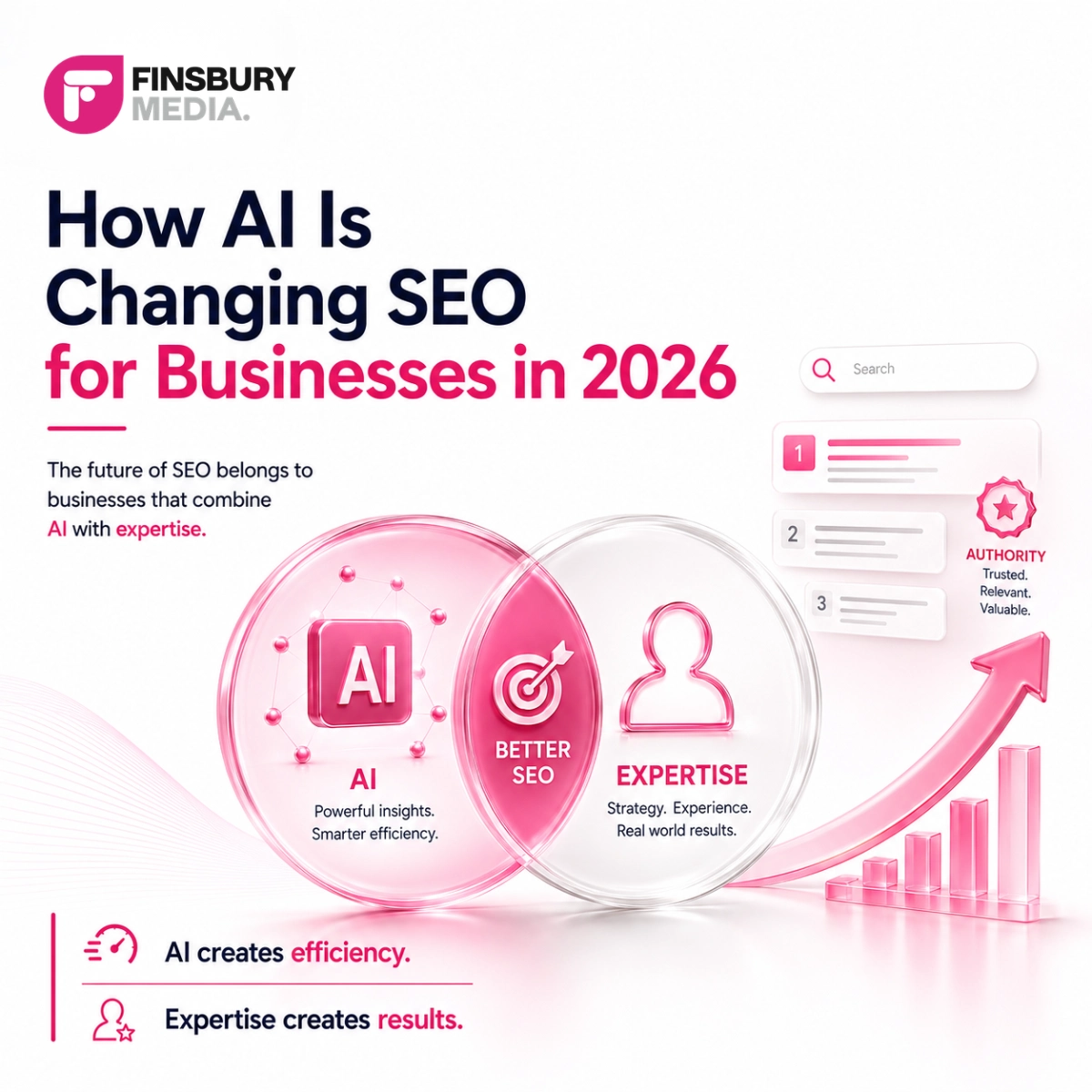
Businesses that combine AI efficiency with human insight are often achieving the strongest results.
AI can support research, idea generation, content planning, and optimisation. However, human expertise remains essential for providing original perspectives, industry knowledge, and practical experience.
This is particularly important for businesses operating in competitive sectors where credibility plays a significant role in purchasing decisions.
AI Can Improve SEO Efficiency
Although AI presents new challenges, it also creates opportunities.
Many businesses are already using AI to streamline elements of their SEO strategy.
Examples include:
- Keyword research
- Topic generation
- Content planning
- Technical SEO analysis
- Competitor research
- Content optimisation
Used correctly, AI can reduce manual workloads and help marketing teams work more efficiently.
However, efficiency should not be confused with effectiveness.
The goal is not simply to create more content. The goal is to create better content that delivers value to users.
Businesses that use AI as a supporting tool rather than a replacement for expertise are often better positioned for long-term success.
Why Expertise Still Matters in SEO
One misconception surrounding AI is that it has removed the need for specialist SEO knowledge.
In reality, the opposite is often true.
As search becomes more sophisticated, businesses require a deeper understanding of how search engines evaluate content and determine rankings.
An experienced SEO agency brings strategic thinking that AI alone cannot replicate.
This includes:
- Understanding commercial intent
- Identifying content gaps
- Developing long-term strategies
- Improving technical performance
- Building authority
- Interpreting performance data
AI can assist with tasks and analysis, but it cannot replace years of industry experience or strategic decision-making.
This is particularly important for businesses operating in competitive industries where organic visibility can directly influence revenue growth.
Technical SEO Remains Critical
While much attention focuses on content, technical SEO remains a fundamental part of search performance.
AI-powered search engines still rely on websites being accessible, well-structured, and easy to understand.
Key technical factors include:
- Site speed
- Mobile usability
- Internal linking
- Crawlability
- Structured data
- User experience
Businesses that neglect technical SEO may struggle to maximise the benefits of even the strongest content strategy.
As search engines become more sophisticated, ensuring websites provide a seamless user experience becomes increasingly important.
The Growing Importance of Authority and Trust
AI-generated content has made it easier than ever for businesses to publish information online.
As a result, authority has become a stronger differentiator.
Search engines are placing greater emphasis on signals that indicate credibility and expertise.
Examples include:
- High-quality backlinks
- Expert-written content
- Industry recognition
- Case studies
- Customer reviews
- Brand reputation
Businesses that invest in building authority are more likely to maintain visibility as search algorithms continue to evolve.
This is another reason why a long-term SEO strategy remains essential despite advances in artificial intelligence.
AI SEO Is Becoming a Dedicated Discipline
As AI continues to influence search behaviour, many businesses are beginning to explore AI SEO strategies specifically designed for this changing environment.
AI SEO focuses on ensuring content is optimised not only for traditional search rankings but also for AI-powered search experiences and answer engines.
This includes:
- Creating comprehensive content
- Structuring information clearly
- Targeting conversational search queries
- Optimising for topical authority
- Improving entity recognition
Businesses that adapt early are likely to benefit as AI-driven search experiences become increasingly common.
For organisations looking to stay ahead of these developments, our dedicated AI SEO services can help prepare content and websites for the future of search.
SEO Is Evolving, Not Disappearing
Every major technological shift has generated predictions about the end of SEO.
The rise of social media, voice search, mobile-first indexing, and artificial intelligence have all prompted similar discussions.
Yet SEO continues to evolve because people still rely on search engines to find information, products, and services.
What changes is how businesses achieve visibility.
In 2026, successful SEO strategies are increasingly focused on quality, expertise, user intent, authority, and technical excellence.
Businesses that embrace AI while maintaining high content standards are likely to be best positioned for long-term success.
The Future of SEO Belongs to Businesses That Combine AI With Expertise
Artificial intelligence is undoubtedly changing how search works.
However, the businesses seeing the strongest results are not replacing expertise with automation. They are combining the efficiency of AI with the knowledge and experience required to create genuinely valuable content.
SEO remains one of the most effective long-term digital marketing channels available to businesses.
The difference is that success now depends less on producing content at scale and more on producing content that deserves to rank.
If your business wants to improve organic visibility while adapting to the future of search, working with an experienced SEO agency can help ensure your strategy remains effective as AI continues to reshape the digital landscape.
Learn more about our SEO Services today.