

GET ACCESS TO OUR AMAZING BLOG DIRECT TO YOUR INBOX
Get industry updates, tips, guides, training documents, white papers and much more direct to your inbox.
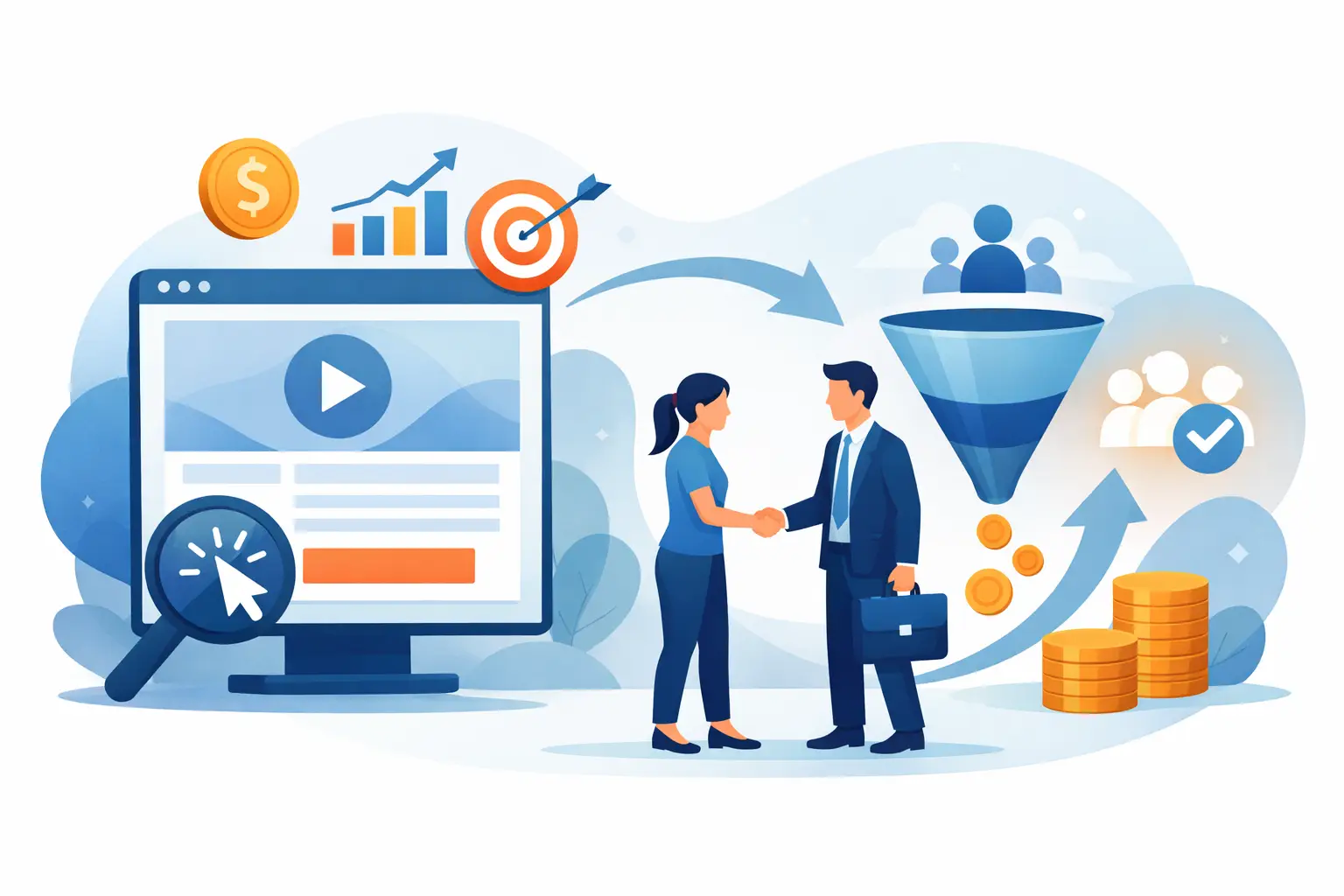
A campaign can be technically flawless and still miss target if the page after the click does not do its job. That is why a strong landing page strategy for PPC leads matters so much. If your ads are driving traffic but enquiries stay flat, the issue is often not the keyword, bid, or audience. It is the gap between user intent and what they see when they land.
For growth-minded businesses, that gap is expensive. You are paying for every click, so the landing page has to carry its share of the workload. It needs to reassure quickly, answer the right questions, remove friction, and make the next step feel obvious. That sounds simple, but in competitive sectors such as legal, healthcare, construction, and local services, small mistakes can quietly drain budget for months.
What a landing page strategy for PPC leads actually needs to do
A landing page is not just a shortened version of your website. It has a different job. Your website can educate, showcase the wider business, and support brand discovery. A PPC landing page needs to convert a specific visitor with a specific intent at a specific moment.
That means relevance comes first. If someone searches for “emergency roofer in Bristol”, clicks an ad, and lands on a broad services page talking about roofing across the South West, you have already introduced doubt. If they land on a focused page for emergency roof repairs in Bristol with clear proof, local trust signals, and a fast route to contact, the conversion path is much stronger.
Good strategy starts by matching the page to the traffic source. Search intent, ad message, audience temperature, and device type all affect what should appear above the fold. A page built for branded search usually needs less persuasion than one built for cold paid social traffic. A page for a high-value B2B enquiry may need more detail than one aimed at a local call-out service.
Start with message match, not design
Many businesses start with layout. That is understandable, but it is usually the wrong first move. The real driver of PPC landing page performance is message match. The headline, supporting copy, offer, and call to action should feel like a natural continuation of the ad.
If your ad promises a free consultation, the page should lead with that. If the ad focuses on fixed-fee pricing, do not make users hunt for it. If the keyword suggests urgency, the page should reflect urgency with concise copy and immediate contact options.
This is where a lot of conversion loss happens. The ad speaks to one need, while the page talks about the business more broadly. Prospects do not want to decode relevance. They want instant confirmation that they are in the right place.
Keep the headline specific
Generic headlines underperform because they force the visitor to do the mental work. “Trusted Experts for Your Business” says very little. “Google Ads Management for Law Firms” or “24/7 Emergency Plumbing in Leeds” says enough in seconds.
Specificity also helps filter poor-fit traffic. That is a good thing. Higher lead volume is not the same as better lead quality, and most businesses would rather have fewer qualified enquiries than a form full of noise.
Build for conversion without feeling aggressive
The best-performing PPC pages are usually the clearest, not the loudest. Visitors need direction, but they do not need to be pushed around. A clean structure, strong hierarchy, and obvious next step will outperform cluttered pages filled with repeated buttons and vague claims.
Above the fold, focus on five essentials: a clear headline, one core value proposition, a relevant visual or proof point, a prominent call to action, and immediate trust signals. Those trust signals might be review ratings, accreditations, client logos, response time promises, or short proof-led statements.
After that, the page should answer the questions a serious buyer is likely to have. What do you offer? Why choose you? What happens next? How quickly can they hear back? What evidence supports your claims?
In more considered purchases, longer pages often win because they reduce uncertainty. In simpler lead-generation campaigns, shorter pages can convert better because they reduce effort. There is no universal rule here. It depends on the complexity of the service, the cost of the decision, and how much trust the audience needs before taking action.
Forms, calls, and lead quality
A form is not just a data capture tool. It is a conversion filter. Ask for too little and sales teams waste time on poor leads. Ask for too much and good prospects leave.
For high-intent services, a short form often works well – name, phone, email, and one qualifying field may be enough. For sectors where lead quality matters more than lead volume, adding fields around budget, project type, or timescale can improve downstream performance even if the conversion rate on page drops slightly.
That trade-off matters. The right metric is not always cost per lead. It is often cost per qualified lead or cost per booked appointment. A page that generates more raw enquiries is not necessarily the better page.
Phone-first businesses should also think carefully about call behaviour. On mobile, click-to-call needs to be easy and immediate. On desktop, some users still prefer forms because they are researching discreetly or outside working hours. A strong page does not force everyone down one route.
Trust signals should match the buyer’s level of risk
Trust is not decorative. It is conversion infrastructure. But the kind of proof you use should reflect what is at stake in the decision.
For a local trades business, recent reviews, before-and-after photography, and location-specific credibility may be enough. For a law firm or private healthcare provider, users may need more reassurance around credentials, experience, compliance, and process. For B2B lead generation, case studies, recognisable client names, and outcome-focused proof usually matter more than star ratings alone.
There is also a timing point here. Do not bury your strongest proof halfway down the page. If the claim is important to conversion, surface it early. Award-winning positioning, partner status, and clear reporting processes can all help when framed around client benefit. Finsbury Media, for example, leans into a results-first approach because sophisticated buyers want visibility as much as they want volume.
Why speed and mobile experience still decide results
Even a persuasive page will struggle if it is slow, awkward on mobile, or difficult to use. PPC traffic is unforgiving. People click with intent, then judge fast.
A lagging page increases bounce rate and wastes paid budget. So does poor mobile design, especially when forms are fiddly, buttons sit too low, or text blocks feel endless on a small screen. This is particularly relevant for local services, urgent searches, and paid social campaigns, where a large share of traffic comes from mobile devices.
The practical test is straightforward. Can a user understand the offer in under five seconds? Can they convert with one hand on a phone? Can they trust what they see without needing to visit three more pages? If not, performance will likely suffer regardless of ad quality.
Tracking is part of the strategy, not an afterthought
A landing page strategy for PPC leads is only as good as the data behind it. If your tracking is weak, optimisation becomes guesswork. You may think a page works because forms are coming in, while the sales team knows those leads never progress.
At minimum, track form submissions, calls, key button clicks, and qualified lead outcomes. Better still, connect campaign, keyword, and landing page data to CRM outcomes so you can see which combinations produce real revenue, not just activity.
This changes decision-making. You stop optimising for vanity metrics and start improving what actually matters. Sometimes that means backing a page with a lower conversion rate because the leads close better. Sometimes it means reducing traffic to a page that looks healthy at first glance but produces weak enquiries.
Test what matters most
Testing works best when it is disciplined. Start with high-impact elements: headline, offer, call to action, form length, proof placement, and page structure. Avoid changing everything at once or you will not know what moved the result.
It is also worth resisting the urge to chase novelty. The goal is not to make the page look different. The goal is to make it convert better. A simpler headline or shorter form often beats a flashy redesign.
The strongest PPC landing pages are built with the wider funnel in mind
A landing page should not sit in isolation from the rest of your marketing. The best results come when PPC, SEO, remarketing, and follow-up processes support one another.
If a prospect is not ready to enquire on the first visit, remarketing can bring them back with a more tailored message. If they convert but do not answer the phone, email automation can keep the conversation alive. If certain service pages rank well organically, the insights from SEO can strengthen paid landing page messaging too.
That joined-up view is what makes lead generation more predictable. Instead of treating the landing page as a standalone asset, you treat it as part of a conversion system.
The real opportunity is not just getting more clicks to convert. It is building pages that make your paid media more efficient, your sales pipeline healthier, and your reporting clearer. When those pieces line up, PPC becomes far easier to scale with confidence.
If your campaigns are generating traffic but not enough quality enquiries, the answer is rarely more spend. Often, it is a sharper page, a tighter message, and a clearer route from click to conversion.