

GET ACCESS TO OUR AMAZING BLOG DIRECT TO YOUR INBOX
Get industry updates, tips, guides, training documents, white papers and much more direct to your inbox.
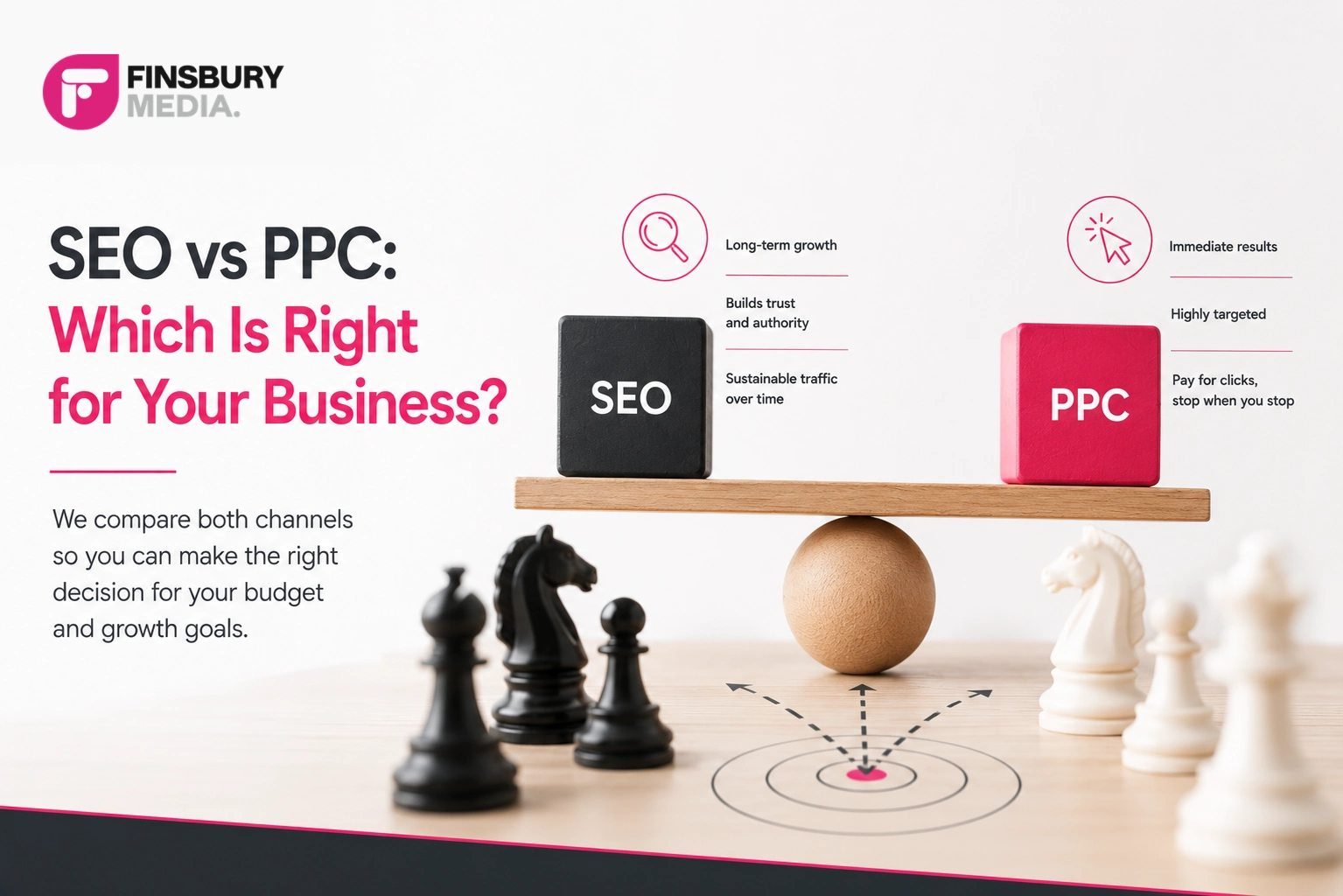
It is one of the most common questions we hear from business owners evaluating their digital marketing options. Should you invest in SEO to build long-term organic visibility, or use Google Ads to generate leads immediately? The honest answer is that both channels serve different purposes, and the right choice depends on where your business is right now, what your budget allows, and how quickly you need results.
What SEO and PPC Each Deliver
Search engine optimisation builds your visibility in the organic results below the paid ads at the top of Google. It is a medium to long-term investment. Done properly, it compounds over time — the rankings you earn in month six are still working for you in month eighteen without additional media cost. The trade-off is time. Most businesses need three to six months before they see meaningful organic traffic movement, and competitive sectors may take longer.
Pay-per-click advertising through Google Ads delivers visibility immediately. From the moment a campaign goes live, your ads can appear at the top of the results for the keywords you are targeting. You pay each time someone clicks, and when the budget stops, so does the traffic. There is no compounding effect, but there is direct control — over spend, targeting, messaging, and timing.
When PPC Makes More Sense
If your business needs enquiries now, PPC is the right starting point. It is particularly effective for businesses launching into a new market, promoting a time-sensitive service, or operating in a sector where the search terms are clear and conversion intent is high. A plumber, a kitchen fitter, or a legal firm targeting specific service queries will typically see a faster and more measurable return from paid search than from SEO in the early months.
PPC also works well when you have a defined geographic area and a specific set of services to promote. A tightly focused campaign with a modest but well-managed budget can generate a consistent flow of qualified enquiries in a way that would take SEO considerably longer to achieve.
When SEO Makes More Sense
If you are building a business for the long term and want to reduce your dependence on paid spend over time, SEO is essential. It is the channel that builds real asset value into your website. Every piece of well-optimised content you publish, every quality backlink you earn, and every technical improvement you make compounds into stronger organic rankings that bring traffic without media cost.
SEO is also more defensible than PPC over time. A competitor can outbid you in the paid auction overnight. It takes considerably more effort and time to displace strong organic rankings once they are established. For businesses in competitive sectors, owning page one organic positions is a significant commercial advantage.
The Case for Running Both Together
The most effective digital marketing programmes use SEO and PPC together. PPC provides immediate visibility while the SEO programme builds in the background. Blog content created for organic search rankings gives the PPC campaign better quality landing pages, which improves Quality Score and reduces cost per click. The data from paid campaigns — which keywords convert, which audiences respond, which messages work — directly informs the SEO content strategy.
When both channels are managed as a connected system rather than independent activities, the return from each is greater than either would produce alone. At Finsbury Media, our SEO services and Google Ads management are built around exactly this integrated approach, and the compounding effect typically becomes measurable within the first three to four months of a combined programme.
Making the Decision
For most small and medium-sized businesses, the practical starting point is determined by budget and timeline. If the budget allows only one channel, PPC delivers faster and more measurable returns in the short term. If you have the runway to invest over six to twelve months, starting SEO early while running a focused PPC campaign alongside it gives you the best of both.
The worst outcome is neither — spending a small amount on both channels without the budget to do either properly. A focused investment in one channel, executed well, will always outperform a diluted investment across both. Speak to the Finsbury Media team about the right balance for your business and we will give you a straight answer based on your sector, budget, and growth objectives.