

GET ACCESS TO OUR AMAZING BLOG DIRECT TO YOUR INBOX
Get industry updates, tips, guides, training documents, white papers and much more direct to your inbox.
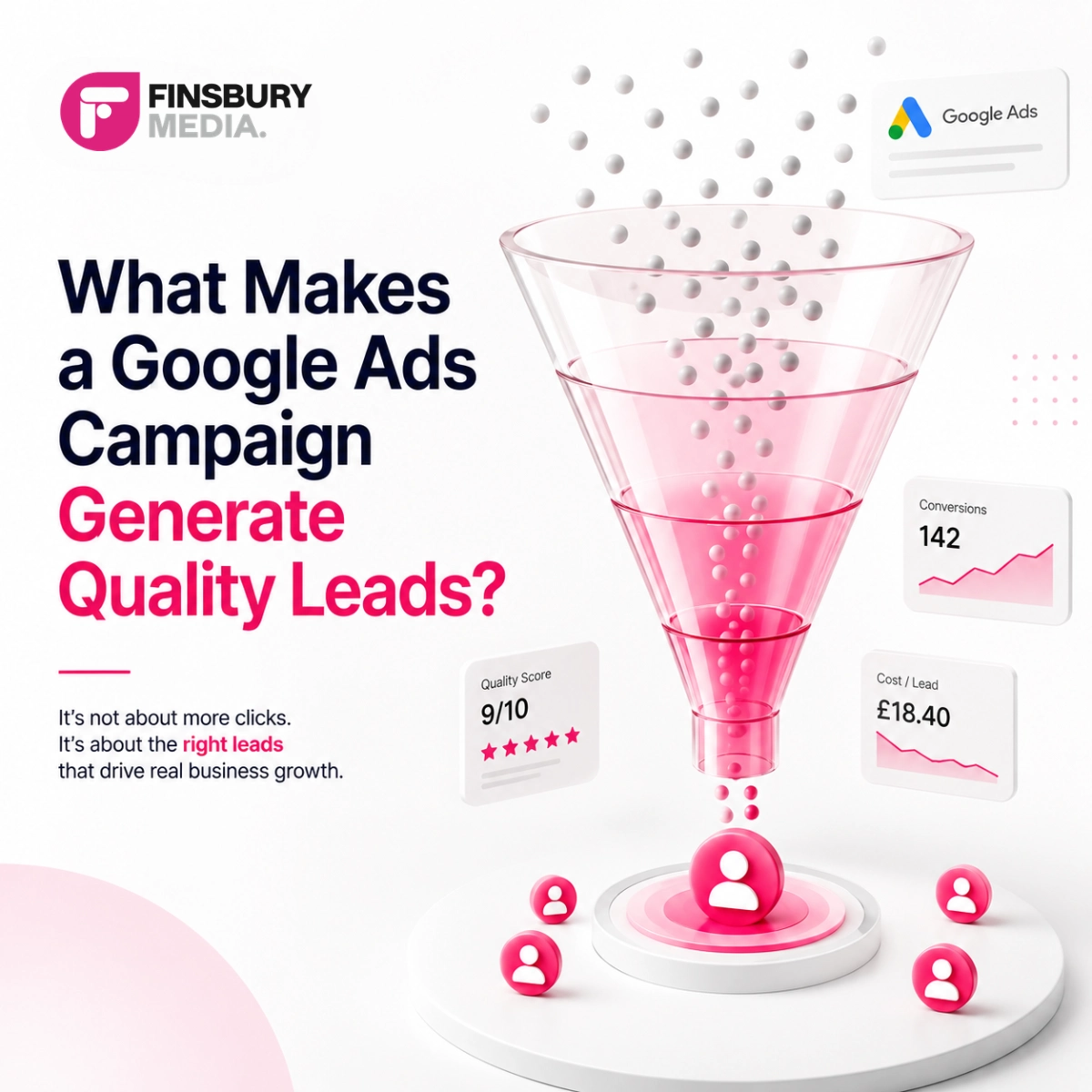
Many businesses invest in Google Ads with one simple goal in mind: generate more leads.
The challenge is that not all leads are equal.
A campaign that generates hundreds of clicks but very few genuine enquiries can quickly become an expensive exercise. Equally, a campaign that produces a smaller volume of highly relevant enquiries can have a far greater impact on revenue and long-term business growth.
This is why successful Google Ads campaigns should not be measured purely on clicks, impressions, or traffic. The real measure of success is the quality of the leads being generated.
For businesses looking to improve their results, understanding what drives lead quality is often the difference between a profitable campaign and wasted advertising spend.
Why Clicks Do Not Equal Business Growth
One of the biggest misconceptions surrounding Google Ads is that more traffic automatically leads to more business.
In reality, traffic alone means very little.
A visitor who accidentally clicks an advert, is researching a topic, or is looking for a free solution is unlikely to become a customer. While these clicks may increase website visits, they do not contribute meaningful value to the business.
A successful Google Ads strategy focuses on attracting users who are actively searching for a product or service and are ready to take action.
This is where lead quality becomes more important than lead quantity.
The best campaigns identify potential customers at the right stage of the buying journey and guide them towards making an enquiry, booking a consultation, or requesting a quote.
Understanding Search Intent
Search intent sits at the heart of every successful Google Ads campaign.
When someone searches on Google, they usually have a specific goal in mind.
Understanding that goal helps advertisers determine whether a keyword is likely to generate quality leads.
For example, a user searching for Google Ads agency London is likely looking for professional support and may be ready to engage with an agency.
In contrast, someone searching for “what is Google Ads” is probably researching the topic and is much earlier in the buying process.
The second search may generate traffic, but the first is significantly more likely to generate a qualified lead.
A strong campaign aligns keywords with commercial intent and focuses budget on searches that indicate a genuine interest in purchasing services.
This approach often leads to fewer clicks but significantly stronger business outcomes.
Keyword Quality Matters More Than Keyword Volume
Many businesses focus on generating as much traffic as possible.
Experienced PPC specialists know that keyword quality is far more important than volume.
High-intent keywords tend to have clearer commercial value because they attract users actively looking for a solution.
Examples might include:
- Google Ads agency
- PPC management services
- Google Ads management company
- PPC agency for SMEs
- Google Ads experts
These searches demonstrate a stronger likelihood that the user is evaluating providers and considering a purchase.
Broad or informational keywords can still have a role within a campaign, but budgets should generally prioritise keywords that align closely with business objectives.
Regular search term analysis is equally important. Reviewing the actual phrases users search before clicking helps eliminate wasted spend and identify new opportunities.
Effective Targeting Improves Lead Quality
Keyword selection is only one part of the equation.
Audience targeting plays a significant role in ensuring adverts are shown to the right people.
Google Ads offers extensive targeting options, allowing businesses to refine who sees their campaigns.
Factors that can influence lead quality include:
- Geographic targeting
- Device targeting
- Audience segments
- Demographic signals
- Time-of-day scheduling
For example, a business operating solely within the UK should avoid paying for clicks from overseas users.
Similarly, analysing historical performance may reveal that leads generated during business hours convert at a higher rate than those generated overnight.
Continuous optimisation helps ensure advertising budgets are focused where they are most likely to deliver results.
Landing Pages Are Often the Difference Between Success and Failure
Even the most targeted Google Ads campaign can struggle if visitors arrive on a poor landing page.
The advert and landing page must work together.
If an advert promises expert PPC management services, the landing page should immediately reinforce that message and clearly explain the value being offered.
Strong landing pages typically include:
- A clear headline
- Relevant supporting information
- Trust signals and credibility indicators
- Simple navigation
- Clear calls to action
- Fast loading speeds
Businesses frequently lose potential customers because landing pages create friction or fail to answer key questions.
Improving landing page performance often increases lead quality without increasing advertising spend.
For businesses reviewing their PPC performance, our Google Ads Agency services can help ensure you hit conversion goals effectively.
Conversion Tracking Is Essential
One of the most important elements of modern PPC management is conversion tracking.
Without accurate tracking, businesses have no reliable way of understanding which campaigns, keywords, and adverts are generating real results.
Google’s automation systems are increasingly dependent on conversion data. The better the data available, the better Google’s algorithms can optimise performance.
Tracking should extend beyond simple form submissions wherever possible.
Businesses should measure meaningful outcomes such as:
- Qualified enquiries
- Sales opportunities
- Phone calls
- Booked consultations
- Revenue generated
This provides a much clearer understanding of campaign effectiveness and helps avoid optimising towards vanity metrics.
A specialist Google Ads Agency will often spend as much time refining tracking and reporting as they do creating adverts.
The Role of Ongoing PPC Management
Many businesses assume Google Ads can be launched and left to run indefinitely.
In reality, successful campaigns require ongoing optimisation.
Search behaviour changes, competitors adjust strategies, and Google’s platform evolves continuously.
Regular PPC management activities typically include:
- Keyword refinement
- Search term reviews
- Bid adjustments
- Ad testing
- Audience optimisation
- Landing page improvements
- Conversion tracking audits
Small improvements across multiple areas can have a significant impact on lead quality over time.
This is one reason many businesses choose professional PPC management services rather than attempting to manage campaigns internally.
For organisations looking to maximise return on investment, working with an experienced PPC team can help ensure campaigns continue improving rather than stagnating.
Quality Leads Should Be the Primary Objective
The most successful Google Ads campaigns are not those that generate the most clicks.
They are the campaigns that consistently attract the right visitors, convert them into genuine enquiries, and contribute to business growth.
Search intent, keyword quality, audience targeting, landing page experience, and accurate conversion tracking all play a crucial role in achieving this outcome.
When these elements work together, Google Ads becomes more than a traffic source. It becomes a reliable lead generation channel capable of delivering measurable commercial results.
If you are investing in Google Ads but unsure whether your campaigns are generating the right type of enquiries, reviewing your targeting, tracking, and landing pages is often the best place to start.