

GET ACCESS TO OUR AMAZING BLOG DIRECT TO YOUR INBOX
Get industry updates, tips, guides, training documents, white papers and much more direct to your inbox.
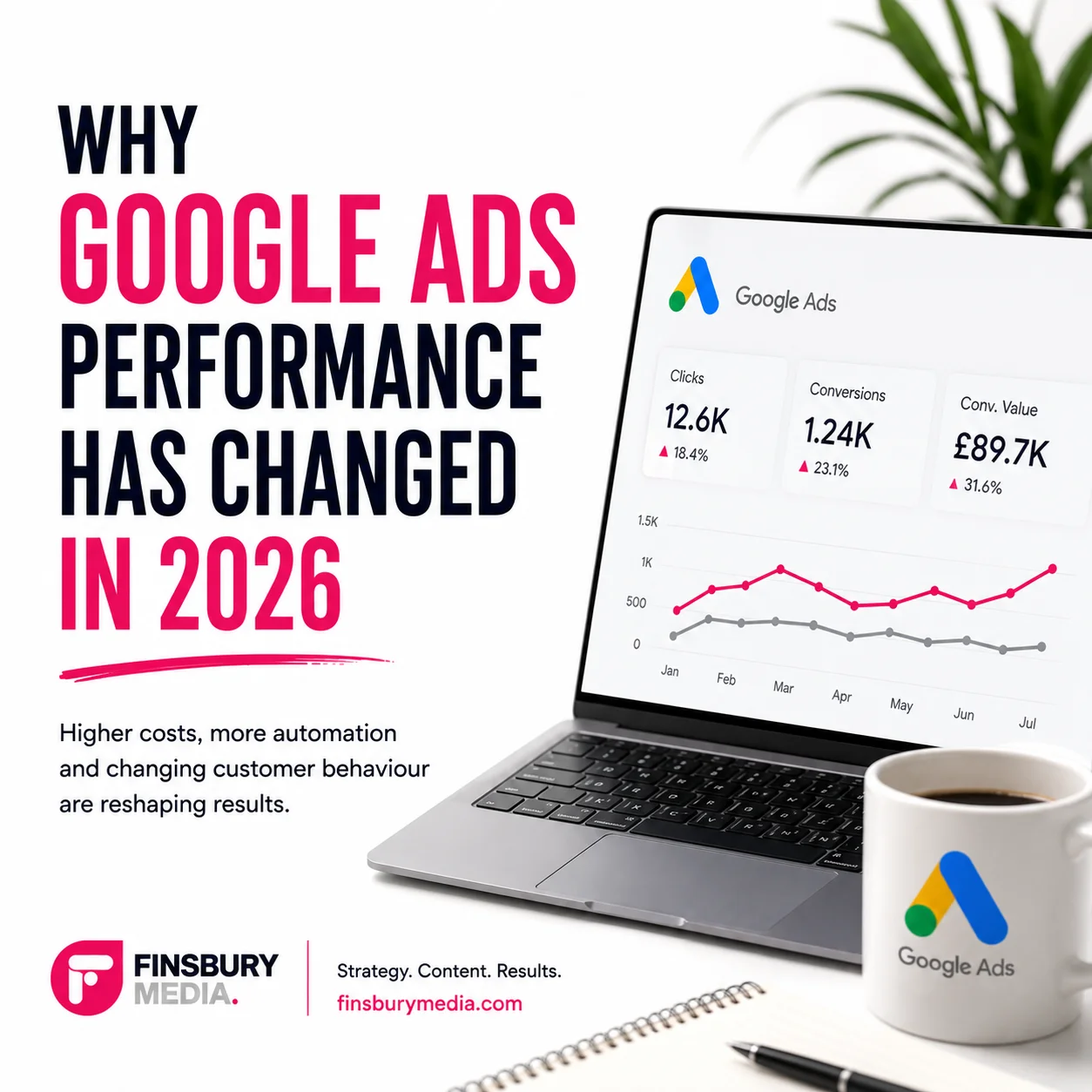
Why Google Ads Performance Has Changed In 2026
Many businesses running Google Ads have noticed significant changes in campaign performance over the past few years.
Costs have increased in many industries, automation has become more prominent, and Google’s AI-driven features now play a much larger role in how campaigns are managed and optimised. As a result, some businesses are finding that strategies which worked previously are no longer delivering the same results.
Understanding why Google Ads performance has changed can help businesses adapt their approach and continue generating high-quality leads.
The Rise Of Automation
One of the biggest changes in Google Ads has been the continued expansion of automation.
Features such as Smart Bidding, Performance Max campaigns and automated audience targeting now influence many aspects of campaign management. Google’s machine learning systems are designed to optimise towards conversion goals, often making thousands of adjustments in real time.
While automation can improve efficiency, it also means businesses need accurate conversion tracking and high-quality data. Without reliable conversion data, automated bidding systems may optimise towards the wrong outcomes.
Businesses that invest time in setting up accurate tracking and working with an expert Google Ads agency often see stronger long-term results.
Competition Has Increased
Digital advertising has become more competitive across almost every sector.
As more businesses invest in Google Ads, auction competition naturally increases. This can lead to higher cost-per-click figures and greater pressure on campaign performance.
The result is that simply increasing budget is rarely enough to improve results. Businesses must focus on campaign structure, keyword targeting, landing page quality and conversion optimisation.
Success increasingly depends on efficiency rather than spending power alone.
Search Behaviour Is Evolving
Customer search behaviour continues to change.
Users are becoming more specific in their searches and often conduct extensive research before making purchasing decisions. They may interact with multiple websites, read reviews, compare suppliers and return several times before converting.
This means businesses should focus on the full customer journey rather than individual clicks.
Understanding search intent and creating relevant landing pages is becoming increasingly important for generating qualified leads.
First-Party Data Matters More Than Ever
Privacy changes have reduced the amount of third-party data available to advertisers.
As a result, businesses are increasingly relying on first-party data collected through their own websites and CRM systems.
Google’s automated systems perform best when they have access to meaningful conversion data. Businesses that accurately track enquiries, phone calls and sales are often able to achieve stronger campaign performance than those relying on basic metrics alone.
This is one reason why conversion tracking has become such an important component of successful PPC management.
Landing Pages Have Greater Influence
Many businesses focus heavily on ad performance while overlooking what happens after a visitor clicks.
In reality, landing pages play a major role in determining campaign success.
A highly targeted advert can still underperform if the landing page is slow, difficult to navigate or fails to address the visitor’s needs.
Businesses should regularly review landing page performance, user experience and conversion rates alongside advertising metrics.
The most successful campaigns combine strong advertising with an effective website experience.
What Businesses Should Focus On
Although Google Ads has changed significantly, the fundamentals remain consistent.
Businesses should focus on:
- Accurate conversion tracking
- Understanding search intent
- High-quality landing pages
- Clear lead qualification processes
- Continuous optimisation based on data
The businesses achieving the best results in 2026 are not necessarily spending the most money. They are making better decisions based on better information.
Looking Ahead
Google Ads will continue to evolve as automation and artificial intelligence become increasingly sophisticated.
However, successful campaigns still depend on clear objectives, reliable data and a strong understanding of customer behaviour.
Businesses that adapt to these changes and focus on long-term optimisation are likely to remain competitive regardless of how the platform develops.
If your Google Ads campaigns are not generating the results you expect, reviewing your strategy, tracking setup and conversion process can often reveal opportunities for improvement.